 Bird Album
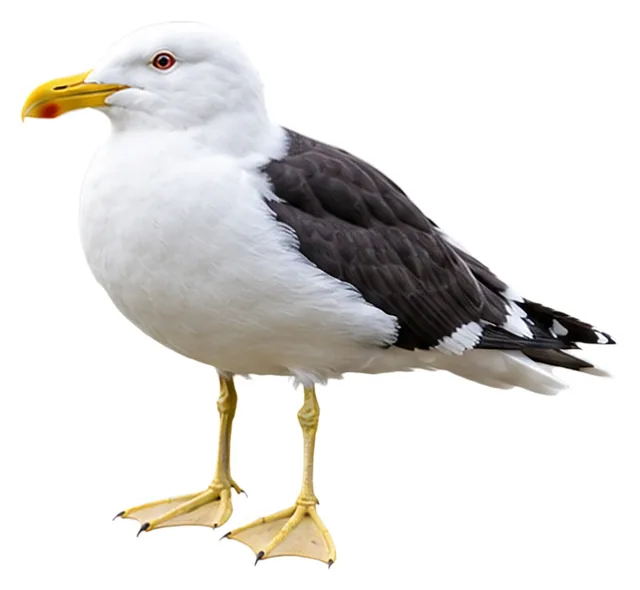
Kelp Gull
Larus dominicanus Lichtenstein, MHC, 1823
952 gWeight
The kelp gull (Larus dominicanus), also known as the Dominican gull, is a gull that breeds on coasts and islands through much of the Southern Hemisphere.
Busiest months: November · Most records: New Zealand, Chile, Argentina
Where and when it's recorded
Busiest months: November · Most records: New Zealand, Chile, Argentina

Kelp Gull has been recorded at 453 of the 8,276 birding hotspots we track, in 38 countries and regions.
Records by month Southern Hemisphere
Where it's recorded most
- Kaikoura – offshore – Albatross Encounter pelagicNew Zealand6,135 records
- SN Humedal Río Maipo – DesembocaduraChile3,144 records
- Strandfontein WTPSouth Africa2,775 records
More places
- SN Laguna BatucoChile2,392 records
- Reserva Ecológica Costanera SurArgentina2,360 records
- Refugio de Vida Silvestre Los Pantanos de Villa – Laguna Costera y Playa MarvillaPeru2,258 records
- Estero MantaguaChile2,203 records
- Eaglehawk Neck Pelagic TripAustralia2,101 records
- Río Lluta – DesembocaduraChile2,078 records
- Humedal Tres PuentesChile1,735 records
Countries and regions with the most records
eBird records via GBIF up to 2024-12-31. A record means someone listed it; more records partly mean more birders, not more birds.
About
The kelp gull (Larus dominicanus), also known as the Dominican gull, is a gull that breeds on coasts and islands through much of the Southern Hemisphere. The nominate L. d. dominicanus is the subspecies found around South America, parts of Australia (where it overlaps with the Pacific gull), and New Zealand (where it is known as the black-backed gull, the southern black-backed gull, mollyhawk – particularly the juveniles, or by its Māori name karoro). L. d. vetula (known as the Cape gull) is a subspecies occurring around Southern Africa.
Excerpt from Wikipedia, CC BY-SA 4.0 · authors · Read more on Wikipedia
Questions
How big is the Kelp Gull?
The Kelp Gull weighs around 952 g.
Where does the Kelp Gull live?
Its breeding range: South America, Australasia, Africa: coasts of southern continents and islands, mostly temperate to Antarctic waters. It is most often recorded in New Zealand, Chile and Argentina.
When is the best time to see the Kelp Gull?
At the hotspots we track, it is recorded most in November (Southern Hemisphere).
Is the Kelp Gull endangered?
The IUCN Red List classifies the Kelp Gull as Least Concern.
What does the Kelp Gull eat?
Main food: Omnivore.
What family is the Kelp Gull in?
It belongs to the family Gulls, Terns, Skimmers (Laridae), order Charadriiformes.
At a glance
- Weight
- 952 g
- Habitat
- Ocean
- Diet
- Omnivore
- Lifestyle
- Varied
- Migration
- Resident (barely migrates)
- Conservation
- Least Concern
More measurements
- Wing
- 402 mm
- Tail
- 154 mm
- Bill
- 65 mm
- Tarsus
- 65 mm
Averages from the AVONET dataset; length from field guides where available.
Range
South America, Australasia, Africa: coasts of southern continents and islands, mostly temperate to Antarctic waters
Breeding range, IOC World Bird List 15.2
Classification
- Order
- Charadriiformes
- Family
- Gulls, Terns, Skimmers Laridae
- Genus
- Larus
Other birds in the genus Larus
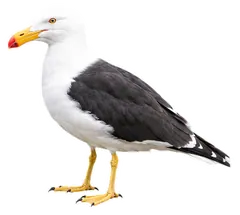 Pacific GullLarus pacificus
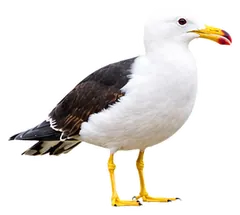 Belcher's GullLarus belcheri
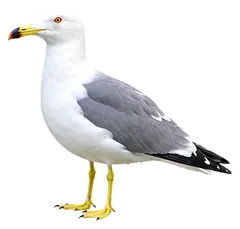 Black-tailed GullLarus crassirostris
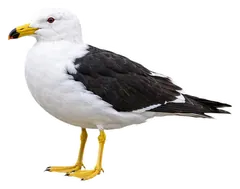 Olrog's GullLarus atlanticus
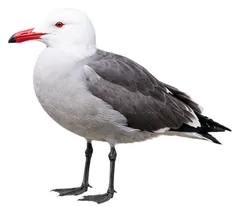 Heermann's GullLarus heermanni
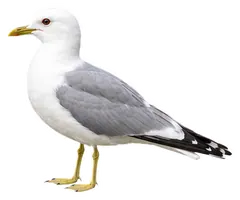 Common GullLarus canus
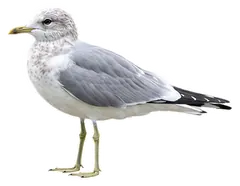 Short-billed GullLarus brachyrhynchus
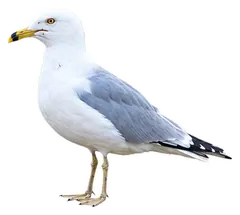 Ring-billed GullLarus delawarensis
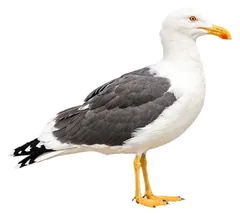 Yellow-footed GullLarus livens
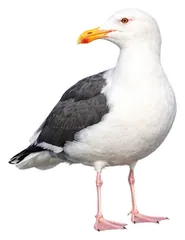 Western GullLarus occidentalis
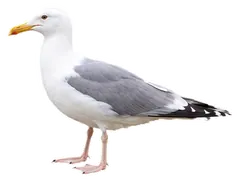 Caspian GullLarus cachinnans
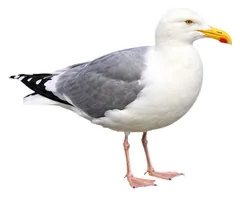 European Herring GullLarus argentatus
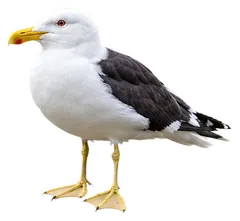
Download illustration
Free to use with credit: “Illustration: Bird Album (birdalbum.com)”. Drawn by AI from a reference photo by Finn Davey. ↗
Heard it but can't see it? Mingji identifies birds by sound and photo, on your phone.