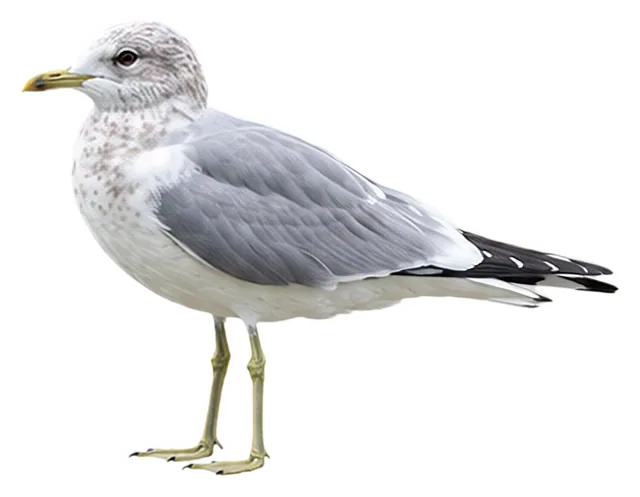
Short-billed Gull
Larus brachyrhynchus Richardson, 1831
40–45 cmLength100–120 cmWingspan412 gWeight
The adult has a shorter bill and longer wings than Common Gull, with a white head and yellow bill and legs in breeding plumage.
Busiest months: January and November · Most records: United States, Canada, Mexico
Looks like Common Gull
How to identify
Field marks
- Breeding adult has a white head and unmarked yellow bill and legs
- Adult has white patches on the two outermost primaries
- Winter adult has a mottled brown head and a gray eye-ring
Male, female and young
Juvenile is brown overall with dark brown wingtips; takes three years to acquire breeding plumage.
Similar species
Where and when it's recorded
Busiest months: January and November · Most records: United States, Canada, Mexico

Short-billed Gull has been recorded at 188 of the 8,276 birding hotspots we track, in 5 countries and regions.
Records by month Northern Hemisphere
Where it's recorded most
- North Vancouver – Maplewood Flats Conservation AreaCanada7,481 records
- Billy Frank Jr. Nisqually NWRUnited States7,260 records
- Pt. Pinos – seawatch onlyUnited States6,794 records
More places
- Discovery ParkUnited States5,796 records
- Rocky Point Bird ObservatoryCanada4,294 records
- Esquimalt LagoonCanada4,041 records
- Edmonds WaterfrontUnited States3,953 records
- Clover PointCanada3,840 records
- Gardiner BeachUnited States3,385 records
- Magnuson ParkUnited States3,242 records
Countries and regions with the most records
eBird records via GBIF up to 2024-12-31. A record means someone listed it; more records partly mean more birders, not more birds.
About
The short-billed gull (Larus brachyrhynchus) is a species of gull that breeds in northwestern North America. In North America, it was previously known as the mew gull, when it was considered conspecific with the palearctic common gull (Larus canus). Most authorities, including the American Ornithological Society in 2021, have split the two populations as distinct species.
Excerpt from Wikipedia, CC BY-SA 4.0 · authors · Read more on Wikipedia
Questions
How big is the Short-billed Gull?
The Short-billed Gull is about 40–45 cm long, with a wingspan of 100–120 cm and weighs around 412 g.
Where does the Short-billed Gull live?
Its breeding range: North America: western, northern Alaska mainland south to Vancouver Island (southwestern British Columbia), and northwestern Canada east to northwestern Alberta. It is most often recorded in United States, Canada and Mexico.
When is the best time to see the Short-billed Gull?
At the hotspots we track, it is recorded most in January and November (Northern Hemisphere).
What does the Short-billed Gull eat?
Main food: Omnivore.
What family is the Short-billed Gull in?
It belongs to the family Gulls, Terns, Skimmers (Laridae), order Charadriiformes.
At a glance
- Length
- 40–45 cm
- Wingspan
- 100–120 cm
- Weight
- 412 g
- Habitat
- Coast & tidal flats
- Diet
- Omnivore
- Lifestyle
- Active on the ground
- Migration
- Migratory
More measurements
- Wing
- 351 mm
- Tail
- 134 mm
- Bill
- 48 mm
- Tarsus
- 49 mm
Averages from the AVONET dataset; length from field guides where available.
Range
North America: western, northern Alaska mainland south to Vancouver Island (southwestern British Columbia), and northwestern Canada east to northwestern Alberta
Breeding range, IOC World Bird List 15.2
Classification
- Order
- Charadriiformes
- Family
- Gulls, Terns, Skimmers Laridae
- Genus
- Larus
Other birds in the genus Larus
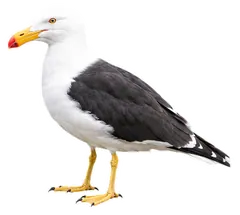 Pacific GullLarus pacificus
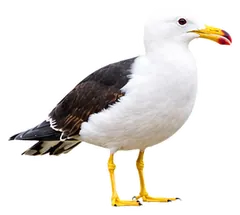 Belcher's GullLarus belcheri
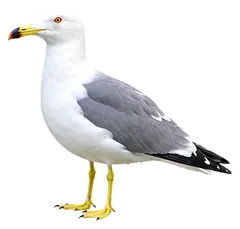 Black-tailed GullLarus crassirostris
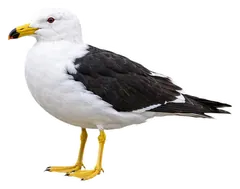 Olrog's GullLarus atlanticus
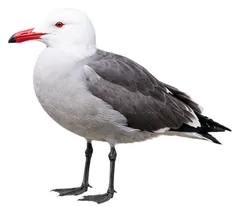 Heermann's GullLarus heermanni
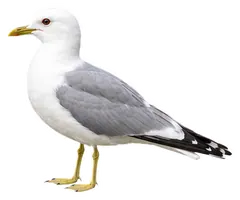 Common GullLarus canus
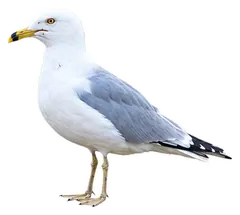 Ring-billed GullLarus delawarensis
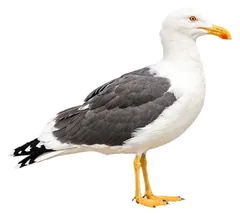 Yellow-footed GullLarus livens
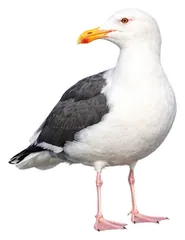 Western GullLarus occidentalis
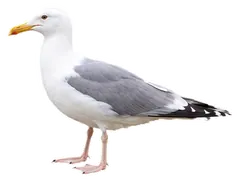 Caspian GullLarus cachinnans
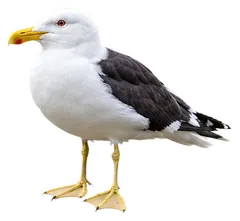 Kelp GullLarus dominicanus
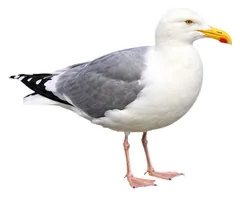 European Herring GullLarus argentatus
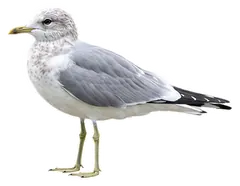
Download illustration
Free to use with credit: “Illustration: Bird Album (birdalbum.com)”. Drawn by AI from a reference photo by Liam Hutcheson. ↗
Heard it but can't see it? Mingji identifies birds by sound and photo, on your phone.