 Bird Album
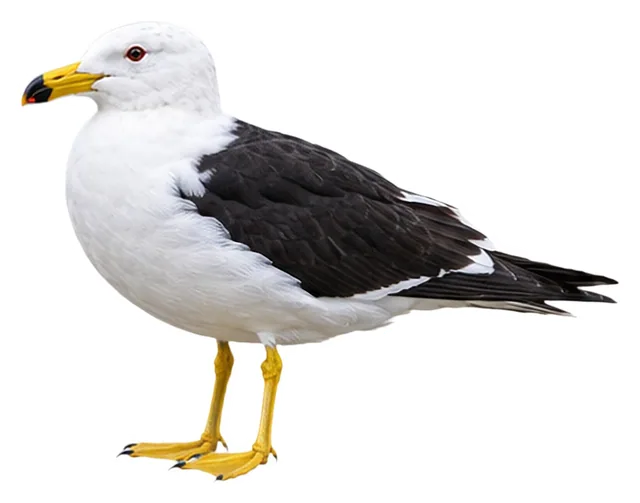
Olrog's Gull
Larus atlanticus Olrog, 1958
842 gWeight
Olrog's gull (Larus atlanticus) is a species of gull found along the Atlantic coast of southern Brazil, Uruguay, and northern Argentina.
Busiest months: June–July · Most records: Argentina, Uruguay, Brazil
Where and when it's recorded
Busiest months: June–July · Most records: Argentina, Uruguay, Brazil

Olrog's Gull has been recorded at 31 of the 8,276 birding hotspots we track, in 3 countries and regions.
Records by month Southern Hemisphere
Where it's recorded most
- Reserva Natural Municipal Punta RasaArgentina472 records
- Mar ChiquitaArgentina435 records
- Laguna José Ignacio – Área sur y DesembocaduraUruguay286 records
More places
- San Clemente del Tuyú – PuertoArgentina232 records
- (IBA) Esteros del Arroyo Maldonado – ÁreaUruguay96 records
- Reserva Natural Puerto Mar del PlataArgentina93 records
- Reserva Ecológica Costanera SurArgentina75 records
- PP Laguna de Rocha – Zona Sur y BarraUruguay67 records
- Reserva Natural Playa PeninoUruguay40 records
- Mar de CoboArgentina24 records
Countries and regions with the most records
eBird records via GBIF up to 2024-12-31. A record means someone listed it; more records partly mean more birders, not more birds.
About
Olrog's gull (Larus atlanticus) is a species of gull found along the Atlantic coast of southern Brazil, Uruguay, and northern Argentina. It was formerly considered a subspecies of the very similar L. belcheri. It is a large gull with a black back and wings, white head and underparts, a black band in the otherwise white tail, and a yellow bill with a red and black tip.
Excerpt from Wikipedia, CC BY-SA 4.0 · authors · Read more on Wikipedia
Questions
How big is the Olrog's Gull?
The Olrog's Gull weighs around 842 g.
Where does the Olrog's Gull live?
Its breeding range: South America: coastal southern Buenos Aires and Chubut provinces (northeastern, east-central Argentina). It is most often recorded in Argentina, Uruguay and Brazil.
When is the best time to see the Olrog's Gull?
At the hotspots we track, it is recorded most in June and July (Southern Hemisphere).
Is the Olrog's Gull endangered?
The IUCN Red List classifies the Olrog's Gull as Near Threatened.
What does the Olrog's Gull eat?
Main food: Fish, shrimp & shellfish.
What family is the Olrog's Gull in?
It belongs to the family Gulls, Terns, Skimmers (Laridae), order Charadriiformes.
At a glance
- Weight
- 842 g
- Habitat
- Coast & tidal flats
- Diet
- Fish, shrimp & shellfish
- Lifestyle
- Feeds in the air
- Migration
- Partial migrant
- Conservation
- Near Threatened
More measurements
- Wing
- 392 mm
- Tail
- 141 mm
- Bill
- 54 mm
- Tarsus
- 54 mm
Averages from the AVONET dataset; length from field guides where available.
Range
South America: coastal southern Buenos Aires and Chubut provinces (northeastern, east-central Argentina)
Breeding range, IOC World Bird List 15.2
Classification
- Order
- Charadriiformes
- Family
- Gulls, Terns, Skimmers Laridae
- Genus
- Larus
Other birds in the genus Larus
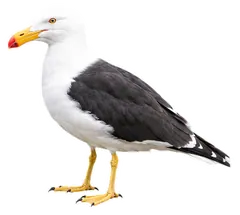 Pacific GullLarus pacificus
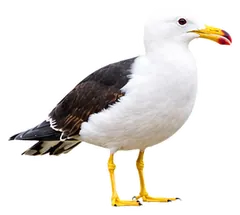 Belcher's GullLarus belcheri
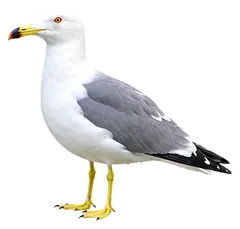 Black-tailed GullLarus crassirostris
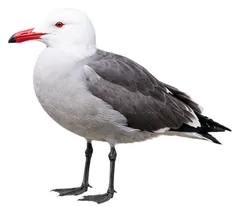 Heermann's GullLarus heermanni
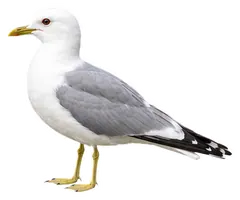 Common GullLarus canus
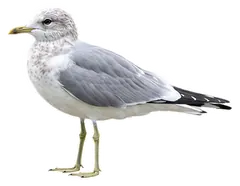 Short-billed GullLarus brachyrhynchus
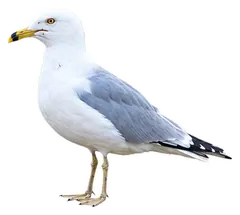 Ring-billed GullLarus delawarensis
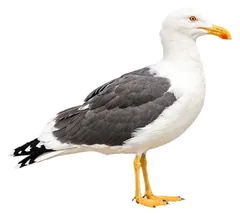 Yellow-footed GullLarus livens
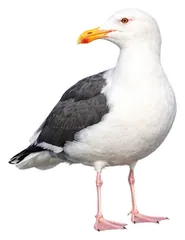 Western GullLarus occidentalis
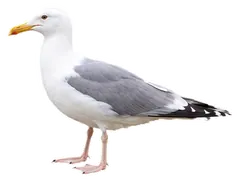 Caspian GullLarus cachinnans
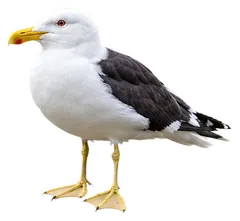 Kelp GullLarus dominicanus
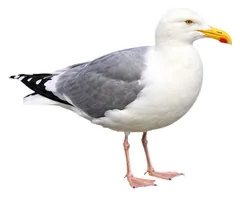 European Herring GullLarus argentatus
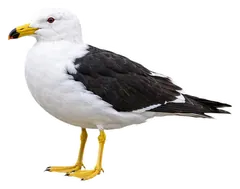
Download illustration
Free to use with credit: “Illustration: Bird Album (birdalbum.com)”. Drawn by AI from a reference photo by NINA WENÓLI. ↗
Heard it but can't see it? Mingji identifies birds by sound and photo, on your phone.