 Bird Album
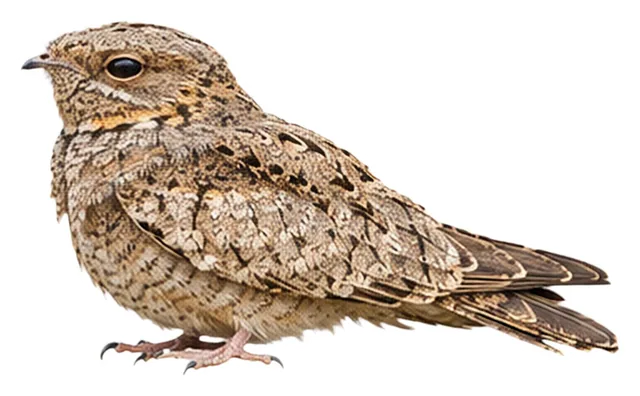
Egyptian Nightjar
Caprimulgus aegyptius Lichtenstein, MHC, 1823
≈27 cmLength77 gWeight
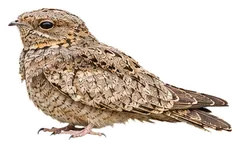
Adults blend into the ground with their sandy feathers and are hard to spot when resting motionless by day.
Busiest months: February–March · Most records: United Arab Emirates, Kuwait, Morocco
How to identify
Field marks
- Adults sandy with yellowish-brown and brown markings
- Adults have sandy or whitish underparts
- Male has small white patches on the wings
- Long wings and a wide gape
Voice
A repeated, mechanical “kroo-kroo-kroo…”, rising and falling in volume as the bird turns its head.
Where and when it's recorded
Busiest months: February–March · Most records: United Arab Emirates, Kuwait, Morocco

Egyptian Nightjar has been recorded at 40 of the 8,276 birding hotspots we track, in 17 countries and regions.
Records by month Northern Hemisphere
Where it's recorded most
- Private estate near Green MubazzarahUnited Arab Emirates743 records
- Al Jahra Reserve (Restricted access)Kuwait111 records
- Erg Chebbi – nordMorocco93 records
More places
- Sulaibiya Pivot Fields - Southern SectionKuwait75 records
- Irakhiya FarmQatar55 records
- Erg Chebbi – MerzougaMorocco49 records
- Wamm FarmsUnited Arab Emirates34 records
- Jahra East Outfall ( al Jodailyat)Kuwait21 records
- Al Marmoom DCR – Al Qudra PivotsUnited Arab Emirates19 records
- Dubai Pivot FieldsUnited Arab Emirates19 records
Countries and regions with the most records
eBird records via GBIF up to 2024-12-31. A record means someone listed it; more records partly mean more birders, not more birds.
About
The Egyptian nightjar (Caprimulgus aegyptius) is a medium-small nightjar which occurs in south west Asia and north Africa and winters in tropical Africa. This is a fairly common species with a wide distribution which faces no obvious threats apart from habitat destruction, so the International Union for Conservation of Nature has rated its conservation status as being of "least concern".
Excerpt from Wikipedia, CC BY-SA 4.0 · authors · Read more on Wikipedia
Questions
How big is the Egyptian Nightjar?
The Egyptian Nightjar is about ≈27 cm long and weighs around 77 g.
Where does the Egyptian Nightjar live?
Its breeding range: Palearctic, Africa: northwestern Africa to south-central Asia. It is most often recorded in United Arab Emirates, Kuwait and Morocco.
When is the best time to see the Egyptian Nightjar?
At the hotspots we track, it is recorded most in February and March (Northern Hemisphere).
Is the Egyptian Nightjar endangered?
The IUCN Red List classifies the Egyptian Nightjar as Least Concern.
What does the Egyptian Nightjar eat?
Main food: Insects & other invertebrates.
What family is the Egyptian Nightjar in?
It belongs to the family Nightjars (Caprimulgidae), order Caprimulgiformes.
At a glance
- Length
- ≈27 cm
- Weight
- 77 g
- Habitat
- Desert
- Diet
- Insects & other invertebrates
- Lifestyle
- Feeds in the air
- Migration
- Migratory
- Conservation
- Least Concern
More measurements
- Wing
- 201 mm
- Tail
- 119 mm
- Bill
- 18 mm
- Tarsus
- 21 mm
Averages from the AVONET dataset; length from field guides where available.
Range
Palearctic, Africa: northwestern Africa to south-central Asia
Breeding range, IOC World Bird List 15.2
Subspecies · 1
- Caprimulgus aegyptius aegyptius ne Egypt through Arabia to w China, w Pakistan and se Iran | non-breeding: c Africa
Classification
- Order
- Caprimulgiformes
- Family
- Nightjars Caprimulgidae
- Genus
- Caprimulgus
Other birds in the genus Caprimulgus
 Red-necked NightjarCaprimulgus ruficollis
 Jungle NightjarCaprimulgus indicus
 Grey NightjarCaprimulgus jotaka
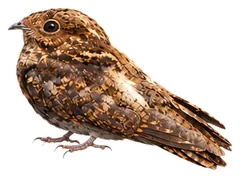 Palau NightjarCaprimulgus phalaena
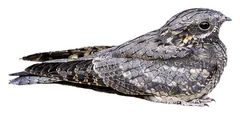 European NightjarCaprimulgus europaeus
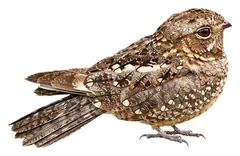 Sombre NightjarCaprimulgus fraenatus
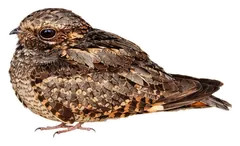 Rufous-cheeked NightjarCaprimulgus rufigena
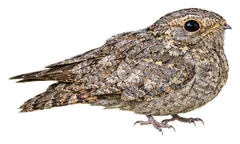 Sykes's NightjarCaprimulgus mahrattensis
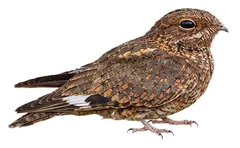 Nubian NightjarCaprimulgus nubicus
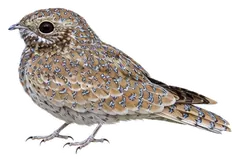 Golden NightjarCaprimulgus eximius
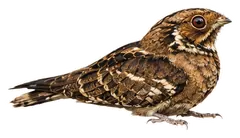 Jerdon's NightjarCaprimulgus atripennis
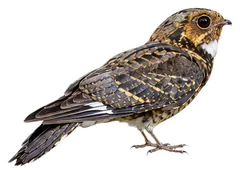 Large-tailed NightjarCaprimulgus macrurus
Download illustration
Free to use with credit: “Illustration: Bird Album (birdalbum.com)”. Drawn by AI from a reference photo by Thijs Valkenburg. ↗
Heard it but can't see it? Mingji identifies birds by sound and photo, on your phone.
In other languages
- EnglishEgyptian Nightjar
- 简体中文埃及夜鹰
- 繁體中文埃及夜鷹
- 日本語エジプトヨタカ
- DeutschPharaonennachtschwalbe
- FrançaisEngoulevent du désert
- EspañolChotacabras egipcio
- Portuguêsnoitibó-do-deserto
- ItalianoSucciacapre isabellino
- NederlandsEgyptische Nachtzwaluw
- РусскийБуланый козодой
- Svenskaökennattskärra
- DanskØrkennatravn
- Polskilelek egipski