 Bird Album
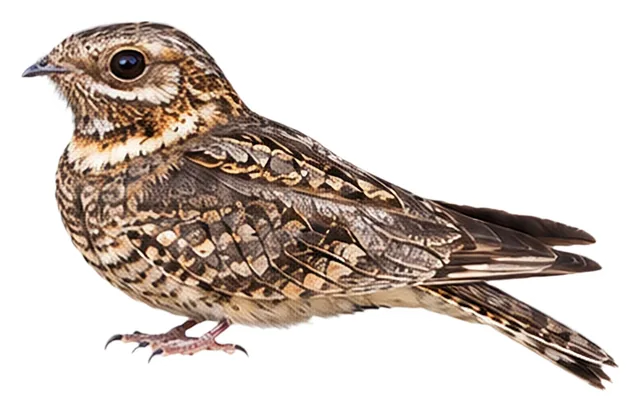
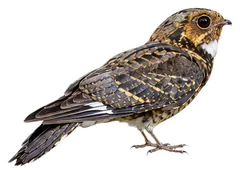
Red-necked Nightjar
Caprimulgus ruficollis Temminck, 1820
68 gWeight
The red-necked nightjar (Caprimulgus ruficollis) is the largest of the nightjars occurring in Europe.
Busiest months: May · Most records: Spain, Portugal, Morocco
Where and when it's recorded
Busiest months: May · Most records: Spain, Portugal, Morocco

Red-necked Nightjar has been recorded at 106 of the 8,276 birding hotspots we track, in 6 countries and regions.
Records by month Northern Hemisphere
Where it's recorded most
- Desembocadura del Guadalhorce – ÁreaSpain190 records
- La Janda – ÁreaSpain186 records
- RN Estuário do Tejo – Monte de PancasPortugal131 records
More places
- Embouchure du Oued SoussMorocco127 records
- Quinta d'A RochaPortugal109 records
- PN Sous-Massa – Estuaire de l'Oued MassaMorocco65 records
- La Janda – Puente del PericónSpain55 records
- Sureste PNat – Soto de las JuntasSpain54 records
- Monfragüe PN – Portilla del TiétarSpain49 records
- Sureste PNat – Miralrío, Velilla de San AntonioSpain49 records
Countries and regions with the most records
eBird records via GBIF up to 2024-12-31. A record means someone listed it; more records partly mean more birders, not more birds.
About
The red-necked nightjar (Caprimulgus ruficollis) is the largest of the nightjars occurring in Europe. It breeds in Iberia and North Africa, and winters in tropical West Africa.
Excerpt from Wikipedia, CC BY-SA 4.0 · authors · Read more on Wikipedia
Questions
How big is the Red-necked Nightjar?
The Red-necked Nightjar weighs around 68 g.
Where does the Red-necked Nightjar live?
Its breeding range: Palearctic, Africa: Iberian Peninsula to northwestern Africa. It is most often recorded in Spain, Portugal and Morocco.
When is the best time to see the Red-necked Nightjar?
At the hotspots we track, it is recorded most in May (Northern Hemisphere).
Is the Red-necked Nightjar endangered?
The IUCN Red List classifies the Red-necked Nightjar as Near Threatened.
What does the Red-necked Nightjar eat?
Main food: Insects & other invertebrates.
What family is the Red-necked Nightjar in?
It belongs to the family Nightjars (Caprimulgidae), order Caprimulgiformes.
At a glance
- Weight
- 68 g
- Habitat
- Forest
- Diet
- Insects & other invertebrates
- Lifestyle
- Feeds in the air
- Migration
- Migratory
- Conservation
- Near Threatened
More measurements
- Wing
- 198 mm
- Tail
- 148 mm
- Bill
- 24 mm
- Tarsus
- 20 mm
Averages from the AVONET dataset; length from field guides where available.
Range
Palearctic, Africa: Iberian Peninsula to northwestern Africa
Breeding range, IOC World Bird List 15.2
Classification
- Order
- Caprimulgiformes
- Family
- Nightjars Caprimulgidae
- Genus
- Caprimulgus
Other birds in the genus Caprimulgus
 Jungle NightjarCaprimulgus indicus
 Grey NightjarCaprimulgus jotaka
 Palau NightjarCaprimulgus phalaena
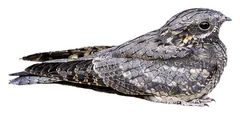 European NightjarCaprimulgus europaeus
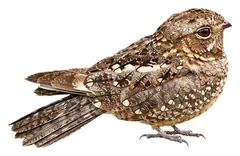 Sombre NightjarCaprimulgus fraenatus
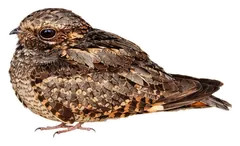 Rufous-cheeked NightjarCaprimulgus rufigena
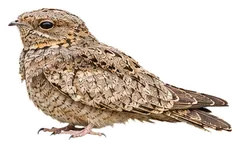 Egyptian NightjarCaprimulgus aegyptius
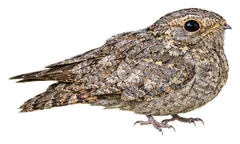 Sykes's NightjarCaprimulgus mahrattensis
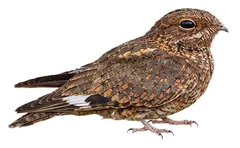 Nubian NightjarCaprimulgus nubicus
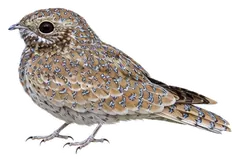 Golden NightjarCaprimulgus eximius
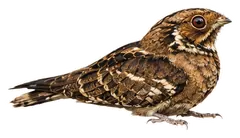 Jerdon's NightjarCaprimulgus atripennis
 Large-tailed NightjarCaprimulgus macrurus
Download illustration
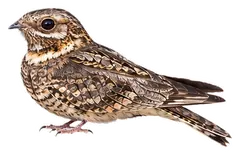
Free to use with credit: “Illustration: Bird Album (birdalbum.com)”. Drawn by AI from a reference photo by naturpel. ↗
Heard it but can't see it? Mingji identifies birds by sound and photo, on your phone.
In other languages
- EnglishRed-necked Nightjar
- 简体中文红颈夜鹰
- 繁體中文紅頸夜鷹
- 日本語アカエリヨタカ
- DeutschRothals-Nachtschwalbe
- FrançaisEngoulevent à collier roux
- EspañolChotacabras cuellirrojo
- Portuguêsnoitibó-de-nuca-vermelha
- ItalianoSucciacapre collorosso
- NederlandsMoorse Nachtzwaluw
- РусскийКрасношейный козодой
- Svenskarödhalsad nattskärra
- DanskRødhalset Natravn
- Polskilelek rdzawoszyi