 Bird Album
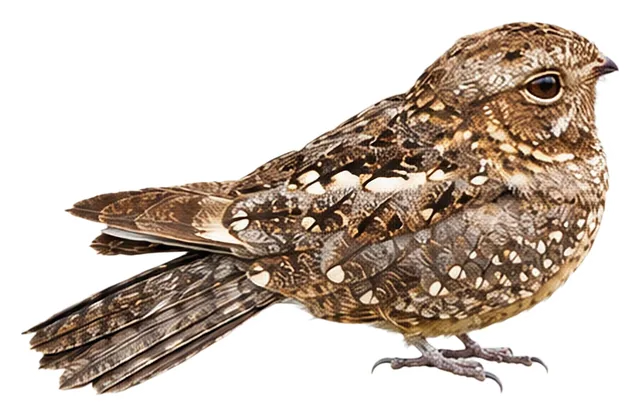
Sombre Nightjar
Caprimulgus fraenatus Salvadori, 1884
60 gWeight
The sombre nightjar or dusky nightjar (Caprimulgus fraenatus) is a species of nightjar in the family Caprimulgidae.
Busiest months: November · Most records: Kenya, Tanzania, Ethiopia
Where and when it's recorded

Sombre Nightjar has been recorded at 43 of the 8,171 birding hotspots we track, in 3 countries and regions.
Records by month Southern Hemisphere
Where it's recorded most
- Nairobi NPKenya42 records
- Aga Khan University – Loilenok Hills and FieldsTanzania38 records
- Tsavo West NP – Ngulia LodgeKenya29 records
More places
- Tsavo West NPKenya17 records
- Mpala Ranch and Research CentreKenya14 records
- Lewa Wildlife ConservancyKenya13 records
- Maasai Mara NR – Mara TriangleKenya11 records
- Awash NPEthiopia10 records
- Naboisho ConservancyKenya10 records
- Tsavo West NP – Kilaguni LodgeKenya8 records
Countries and regions with the most records
eBird records via GBIF up to 2024-12-31. A record means someone listed it; more records partly mean more birders, not more birds.
About
The sombre nightjar or dusky nightjar (Caprimulgus fraenatus) is a species of nightjar in the family Caprimulgidae.
Excerpt from Wikipedia, CC BY-SA 4.0 · authors · Read more on Wikipedia
Questions
How big is the Sombre Nightjar?
The Sombre Nightjar weighs around 60 g.
Where does the Sombre Nightjar live?
Its breeding range: Africa: Eritrea, Ethiopia and Somalia to northeastern Tanzania. It is most often recorded in Kenya, Tanzania and Ethiopia.
When is the best time to see the Sombre Nightjar?
At the hotspots we track, it is recorded most in November (Southern Hemisphere).
Is the Sombre Nightjar endangered?
The IUCN Red List classifies the Sombre Nightjar as Least Concern.
What does the Sombre Nightjar eat?
Main food: Insects & other invertebrates.
What family is the Sombre Nightjar in?
It belongs to the family Nightjars (Caprimulgidae), order Caprimulgiformes.
At a glance
- Weight
- 60 g
- Habitat
- Shrubland
- Diet
- Insects & other invertebrates
- Lifestyle
- Feeds in the air
- Migration
- Resident (barely migrates)
- Conservation
- Least Concern
More measurements
- Wing
- 162 mm
- Tail
- 109 mm
- Bill
- 18 mm
- Tarsus
- 19 mm
Averages from the AVONET dataset; length from field guides where available.
Range
Africa: Eritrea, Ethiopia and Somalia to northeastern Tanzania
Breeding range, IOC World Bird List 15.2
Classification
- Order
- Caprimulgiformes
- Family
- Nightjars Caprimulgidae
- Genus
- Caprimulgus
Other birds in the genus Caprimulgus
 Red-necked NightjarCaprimulgus ruficollis
 Jungle NightjarCaprimulgus indicus
 Grey NightjarCaprimulgus jotaka
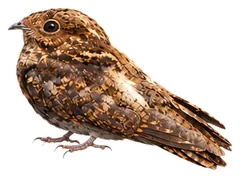 Palau NightjarCaprimulgus phalaena
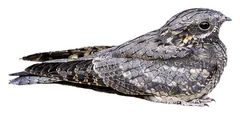 European NightjarCaprimulgus europaeus
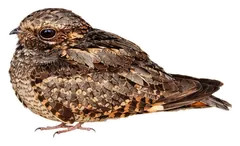 Rufous-cheeked NightjarCaprimulgus rufigena
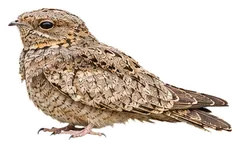 Egyptian NightjarCaprimulgus aegyptius
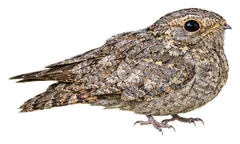 Sykes's NightjarCaprimulgus mahrattensis
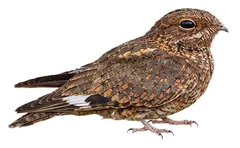 Nubian NightjarCaprimulgus nubicus
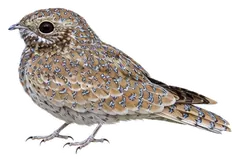 Golden NightjarCaprimulgus eximius
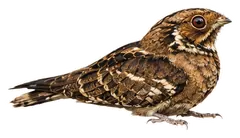 Jerdon's NightjarCaprimulgus atripennis
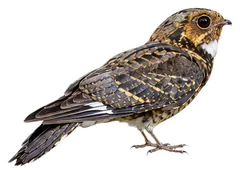 Large-tailed NightjarCaprimulgus macrurus
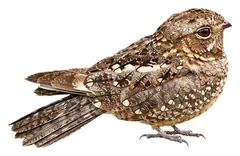
Download illustration
Free to use with credit: “Illustration: Bird Album (birdalbum.com)”. Drawn by AI from a reference photo by Nik Borrow. ↗
Heard it but can't see it? Mingji identifies birds by sound and photo, on your phone.