 Bird Album
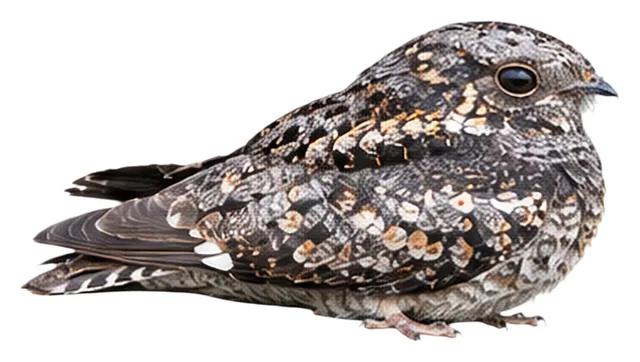
Grey Nightjar
Caprimulgus jotaka Temminck & Schlegel, 1845
≈30 cmLength92 gWeight
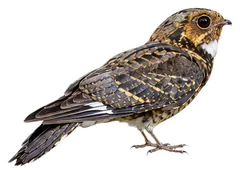
With mottled plumage, it often rests by day on grassy slopes or branches and is hard to spot when lying lengthwise along a branch.
Busiest months: April–May · Most records: China, Thailand, Singapore
How to identify
Field marks
- Large head and eyes, long tail and weak bill; short-legged
- Conspicuous white patch on the throat
- Conspicuous black streak along the center of the crown
- Male has white patches near the tips of the outer tail feathers
Male, female and young
The female has similar but slightly paler plumage, a smaller white throat patch and no white patches on the middle of the flight feathers or on the tail feathers.
Voice
A series of hollow “byuck” calls lasting 2–4 seconds, repeated at short intervals, like a cartoon laser gun.
Where and when it's recorded

Grey Nightjar has been recorded at 594 of the 8,171 birding hotspots we track, in 18 countries and regions.
Records by month Northern Hemisphere
Where it's recorded most
- Bukit FraserMalaysia96 records
- Man Nai IslandThailand78 records
- Nanhui DongtanChina65 records
More places
- BidadariSingapore57 records
- Dairy Farm Nature ParkSingapore57 records
- Muravyevka ParkRussia56 records
- Mang DenVietnam55 records
- Pak Sha OHong Kong (China)53 records
- SattalIndia50 records
- Khao Yai NPThailand49 records
Countries and regions with the most records
eBird records via GBIF up to 2024-12-31. A record means someone listed it; more records partly mean more birders, not more birds.
About
The grey nightjar (Caprimulgus jotaka; also "gray" in some non-local literature) is a species of nightjar found in East Asia, breeding from southeastern Russia south through China, the Korean Peninsula and Japan to northern Indochina and westward along the Himalayas. It is largely migratory, wintering in Indochina south to Java in Indonesia, but is resident in warmer areas in the south of its breeding range. It is sometimes treated as a subspecies of the jungle nightjar (C. indicus), its South Asian relative.
Excerpt from Wikipedia, CC BY-SA 4.0 · authors · Read more on Wikipedia
Questions
How big is the Grey Nightjar?
The Grey Nightjar is about ≈30 cm long and weighs around 92 g.
Where does the Grey Nightjar live?
Its breeding range: Oriental: Himalayas to eastern, Southeast Asia. It is most often recorded in China, Thailand and Singapore.
When is the best time to see the Grey Nightjar?
At the hotspots we track, it is recorded most in April and May (Northern Hemisphere).
Is the Grey Nightjar endangered?
The IUCN Red List classifies the Grey Nightjar as Least Concern.
What does the Grey Nightjar eat?
Main food: Insects & other invertebrates.
What family is the Grey Nightjar in?
It belongs to the family Nightjars (Caprimulgidae), order Caprimulgiformes.
At a glance
- Length
- ≈30 cm
- Weight
- 92 g
- Habitat
- Forest
- Diet
- Insects & other invertebrates
- Lifestyle
- Varied
- Migration
- Resident (barely migrates)
- Conservation
- Least Concern
More measurements
- Wing
- 203 mm
- Tail
- 131 mm
- Bill
- 22 mm
- Tarsus
- 13 mm
Averages from the AVONET dataset; length from field guides where available.
Range
Oriental: Himalayas to eastern, Southeast Asia
Breeding range, IOC World Bird List 15.2
Subspecies · 2
- Caprimulgus jotaka jotaka se Siberia to Japan, Korean Pen. and e China | non-breeding: to Greater Sundas; vagrant Philippines
- Caprimulgus jotaka hazarae ne Pakistan through Himalayas to ne India, Myanmar, s China and Malay Pen.
Classification
- Order
- Caprimulgiformes
- Family
- Nightjars Caprimulgidae
- Genus
- Caprimulgus
Other birds in the genus Caprimulgus
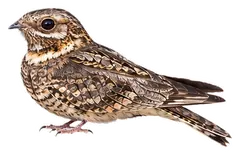 Red-necked NightjarCaprimulgus ruficollis
 Jungle NightjarCaprimulgus indicus
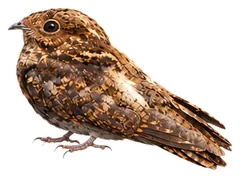 Palau NightjarCaprimulgus phalaena
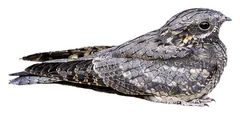 European NightjarCaprimulgus europaeus
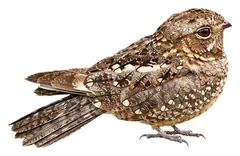 Sombre NightjarCaprimulgus fraenatus
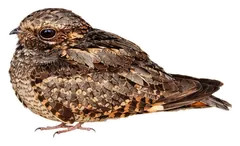 Rufous-cheeked NightjarCaprimulgus rufigena
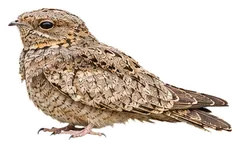 Egyptian NightjarCaprimulgus aegyptius
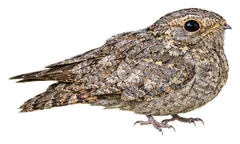 Sykes's NightjarCaprimulgus mahrattensis
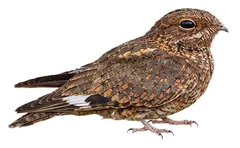 Nubian NightjarCaprimulgus nubicus
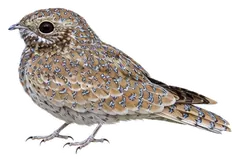 Golden NightjarCaprimulgus eximius
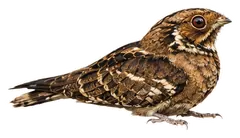 Jerdon's NightjarCaprimulgus atripennis
 Large-tailed NightjarCaprimulgus macrurus
Download illustration
Free to use with credit: “Illustration: Bird Album (birdalbum.com)”. Drawn by AI from a reference photo by Koshy Koshy. ↗

Heard it but can't see it? Mingji identifies birds by sound and photo, on your phone.