 Bird Album
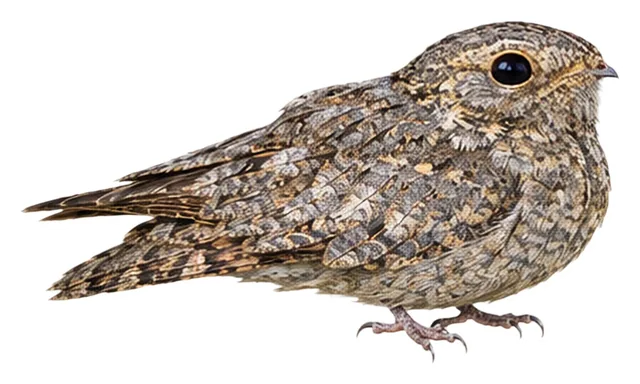
Sykes's Nightjar
Caprimulgus mahrattensis Sykes, 1832
20–25 cmLength57 gWeight
The Sykes's nightjar, Sykes' nightjar, Sind nightjar or Sindh nightjar (Caprimulgus mahrattensis) is a nightjar species found in northwestern South Asia.
Busiest months: December–January · Most records: India, Bangladesh, United Arab Emirates
Where and when it's recorded

Sykes's Nightjar has been recorded at 15 of the 8,171 birding hotspots we track, in 4 countries and regions.
Records by month Northern Hemisphere
Where it's recorded most
- Nalsarovar OutskirtsIndia40 records
- Nalsarovar Bird SanctuaryIndia32 records
- Padma River & CharsBangladesh28 records
More places
- Viva Wetlands, VirarIndia14 records
- Wamm FarmsUnited Arab Emirates8 records
- Khijadiya Bird SanctuaryIndia6 records
- Haleji LakePakistan5 records
- Dubai Pivot FieldsUnited Arab Emirates4 records
- Bhandup Pumping StationIndia3 records
- Hub Dam Wildlife SanctuaryPakistan1 record
Countries and regions with the most records
eBird records via GBIF up to 2024-12-31. A record means someone listed it; more records partly mean more birders, not more birds.
About
The Sykes's nightjar, Sykes' nightjar, Sind nightjar or Sindh nightjar (Caprimulgus mahrattensis) is a nightjar species found in northwestern South Asia. This species has a large range with stable population size and therefore has been listed as "Least Concern" with no prediction of substantial human influence on their habitats in the near future.
Excerpt from Wikipedia, CC BY-SA 4.0 · authors · Read more on Wikipedia
Questions
How big is the Sykes's Nightjar?
The Sykes's Nightjar is about 20–25 cm long and weighs around 57 g.
Where does the Sykes's Nightjar live?
Its breeding range: Palearctic: southeastern Iran, southern Afghanistan, sub-Himalayan Pakistan and far western India. It is most often recorded in India, Bangladesh and United Arab Emirates.
When is the best time to see the Sykes's Nightjar?
At the hotspots we track, it is recorded most in January and December (Northern Hemisphere).
Is the Sykes's Nightjar endangered?
The IUCN Red List classifies the Sykes's Nightjar as Least Concern.
What does the Sykes's Nightjar eat?
Main food: Insects & other invertebrates.
What family is the Sykes's Nightjar in?
It belongs to the family Nightjars (Caprimulgidae), order Caprimulgiformes.
At a glance
- Length
- 20–25 cm
- Weight
- 57 g
- Habitat
- Shrubland
- Diet
- Insects & other invertebrates
- Lifestyle
- Feeds in the air
- Migration
- Resident (barely migrates)
- Conservation
- Least Concern
More measurements
- Wing
- 169 mm
- Tail
- 104 mm
- Bill
- 16 mm
- Tarsus
- 20 mm
Averages from the AVONET dataset; length from field guides where available.
Range
Palearctic: southeastern Iran, southern Afghanistan, sub-Himalayan Pakistan and far western India
Breeding range, IOC World Bird List 15.2
Classification
- Order
- Caprimulgiformes
- Family
- Nightjars Caprimulgidae
- Genus
- Caprimulgus
Other birds in the genus Caprimulgus
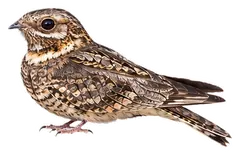 Red-necked NightjarCaprimulgus ruficollis
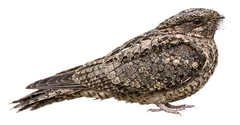 Jungle NightjarCaprimulgus indicus
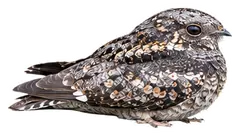 Grey NightjarCaprimulgus jotaka
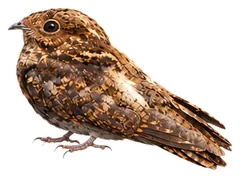 Palau NightjarCaprimulgus phalaena
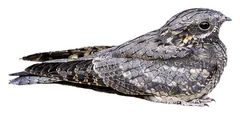 European NightjarCaprimulgus europaeus
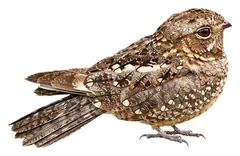 Sombre NightjarCaprimulgus fraenatus
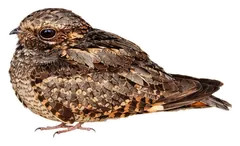 Rufous-cheeked NightjarCaprimulgus rufigena
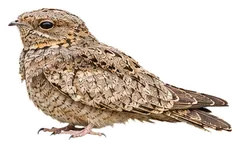 Egyptian NightjarCaprimulgus aegyptius
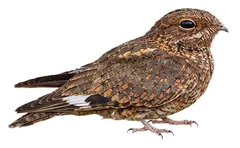 Nubian NightjarCaprimulgus nubicus
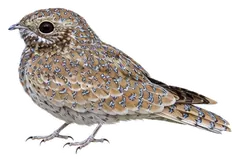 Golden NightjarCaprimulgus eximius
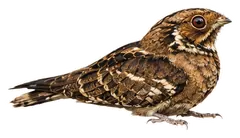 Jerdon's NightjarCaprimulgus atripennis
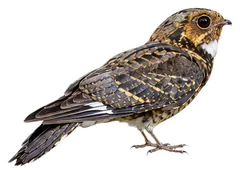 Large-tailed NightjarCaprimulgus macrurus
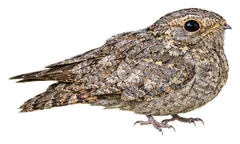
Download illustration
Free to use with credit: “Illustration: Bird Album (birdalbum.com)”. Drawn by AI from a reference photo by Avinash Bhagat. ↗
Heard it but can't see it? Mingji identifies birds by sound and photo, on your phone.
In other languages
- EnglishSykes's Nightjar
- 简体中文塞氏夜鹰
- 繁體中文塞克氏夜鷹
- 日本語ウスイロヨタカ
- DeutschPakistannachtschwalbe
- FrançaisEngoulevent de Sykes
- EspañolChotacabras de Mahratta
- Portuguêsnoitibó-do-sinde
- ItalianoSucciacapre di Sykes
- NederlandsSykes' Nachtzwaluw
- РусскийСиндский козодой
- Svenskasindnattskärra
- DanskØstlig Ørkennatravn
- Polskilelek piaskowy