 Bird Album
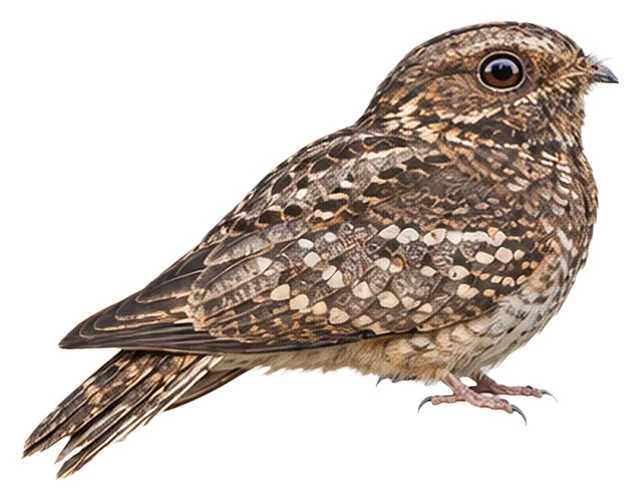
Fiery-necked Nightjar
Caprimulgus pectoralis Cuvier, 1816
51 gWeight
The fiery-necked nightjar (Caprimulgus pectoralis) is a species of nightjar in the family Caprimulgidae, which is found mostly in Africa south of the equator, though it has been spotted in a few countries north of the equator.
Busiest months: August and October · Most records: South Africa, Uganda, Botswana
Where and when it's recorded

Fiery-necked Nightjar has been recorded at 247 of the 8,276 birding hotspots we track, in 20 countries and regions.
Records by month Southern Hemisphere
Where it's recorded most
- Lake Mburo NPUganda221 records
- Mkhuze GRSouth Africa220 records
- Phinda GR – AirfieldSouth Africa160 records
More places
- Arabuko-Sokoke Forest NRKenya121 records
- Manyoni GR – Zebra Hills LodgeSouth Africa107 records
- Kruger NP – Berg-en-Dal CampSouth Africa99 records
- Kruger NP – Skukuza CampSouth Africa96 records
- Kruger NP – Punda Maria CampSouth Africa86 records
- Okavango Delta – Xaro LodgeBotswana77 records
- Rwakobo Rock LodgeUganda76 records
Countries and regions with the most records
eBird records via GBIF up to 2024-12-31. A record means someone listed it; more records partly mean more birders, not more birds.
About
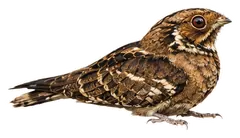
The fiery-necked nightjar (Caprimulgus pectoralis) is a species of nightjar in the family Caprimulgidae, which is found mostly in Africa south of the equator, though it has been spotted in a few countries north of the equator. It is most often found in woodland savannas or other deciduous woodlands. It is usually distinguished by its tawny coloured collar which gives the species its common name.
Excerpt from Wikipedia, CC BY-SA 4.0 · authors · Read more on Wikipedia
Questions
How big is the Fiery-necked Nightjar?
The Fiery-necked Nightjar weighs around 51 g.
Where does the Fiery-necked Nightjar live?
Its breeding range: Africa: western, southern, southeastern, south-central. It is most often recorded in South Africa, Uganda and Botswana.
When is the best time to see the Fiery-necked Nightjar?
At the hotspots we track, it is recorded most in August and October (Southern Hemisphere).
Is the Fiery-necked Nightjar endangered?
The IUCN Red List classifies the Fiery-necked Nightjar as Least Concern.
What does the Fiery-necked Nightjar eat?
Main food: Insects & other invertebrates.
What family is the Fiery-necked Nightjar in?
It belongs to the family Nightjars (Caprimulgidae), order Caprimulgiformes.
At a glance
- Weight
- 51 g
- Habitat
- Woodland
- Diet
- Insects & other invertebrates
- Lifestyle
- Varied
- Migration
- Partial migrant
- Conservation
- Least Concern
More measurements
- Wing
- 164 mm
- Tail
- 117 mm
- Bill
- 19 mm
- Tarsus
- 19 mm
Averages from the AVONET dataset; length from field guides where available.
Range
Africa: western, southern, southeastern, south-central
Breeding range, IOC World Bird List 15.2
Classification
- Order
- Caprimulgiformes
- Family
- Nightjars Caprimulgidae
- Genus
- Caprimulgus
Other birds in the genus Caprimulgus
 Red-necked NightjarCaprimulgus ruficollis
 Jungle NightjarCaprimulgus indicus
 Grey NightjarCaprimulgus jotaka
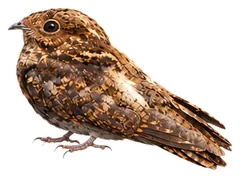 Palau NightjarCaprimulgus phalaena
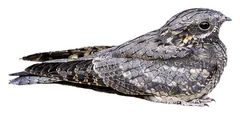 European NightjarCaprimulgus europaeus
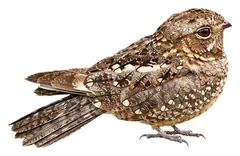 Sombre NightjarCaprimulgus fraenatus
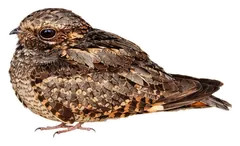 Rufous-cheeked NightjarCaprimulgus rufigena
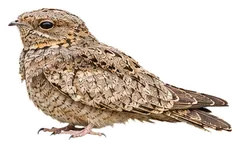 Egyptian NightjarCaprimulgus aegyptius
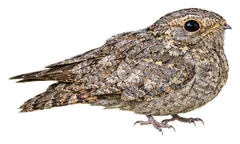 Sykes's NightjarCaprimulgus mahrattensis
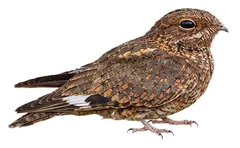 Nubian NightjarCaprimulgus nubicus
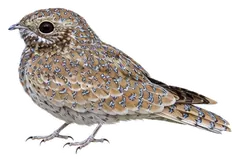 Golden NightjarCaprimulgus eximius
 Jerdon's NightjarCaprimulgus atripennis
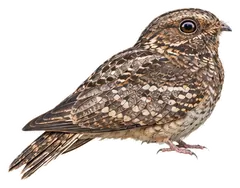
Download illustration
Free to use with credit: “Illustration: Bird Album (birdalbum.com)”. Drawn by AI from reference photos. ↗
Heard it but can't see it? Mingji identifies birds by sound and photo, on your phone.
In other languages
- EnglishFiery-necked Nightjar
- 简体中文非洲夜鹰
- 繁體中文南非夜鷹
- 日本語チャエリヨタカ
- DeutschPfeifnachtschwalbe
- FrançaisEngoulevent musicien
- EspañolChotacabras músico
- Portuguêsnoitibó-de-pescoço-dourado
- ItalianoSucciacapre colloflammeo
- NederlandsRoesthalsnachtzwaluw
- РусскийСвистящий козодой
- Svenskavisselnattskärra
- DanskSydafrikansk Natravn
- Polskilelek śniady