 Bird Album
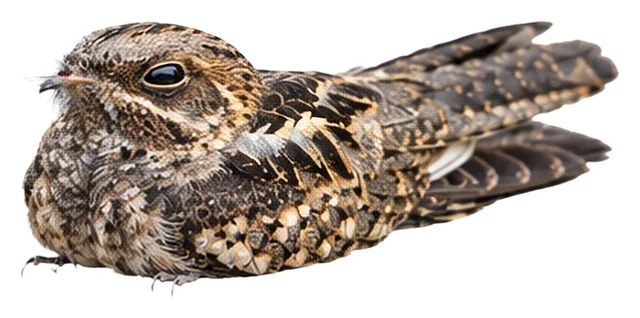
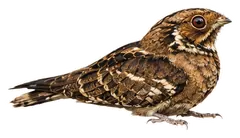
Indian Nightjar
Caprimulgus asiaticus Latham, 1790
42 gWeight
The Indian nightjar (Caprimulgus asiaticus) is a small nightjar which is a resident breeder in open lands across South Asia and Southeast Asia.
Busiest months: January–February · Most records: India, Thailand, Sri Lanka
Where and when it's recorded
Busiest months: January–February · Most records: India, Thailand, Sri Lanka

Indian Nightjar has been recorded at 188 of the 8,276 birding hotspots we track, in 7 countries and regions.
Records by month Northern Hemisphere
Where it's recorded most
- Yala National ParkSri Lanka254 records
- Indroda Nature ParkIndia225 records
- Vetal Tekdi/HillIndia200 records
More places
- Salim Ali Centre for Ornithology and Natural HistoryIndia194 records
- Ujani Dam – Kumbhargaon Bird SanctuaryIndia189 records
- Rishi Valley – School CampusIndia155 records
- Bharatpur – Keoladeo Ghana NPIndia144 records
- Manipal – End PointIndia138 records
- Jayamangali Blackbuck Conservation ReserveIndia127 records
- Ankasamudra Bird SanctuaryIndia115 records
Countries and regions with the most records
eBird records via GBIF up to 2024-12-31. A record means someone listed it; more records partly mean more birders, not more birds.
About
The Indian nightjar (Caprimulgus asiaticus) is a small nightjar which is a resident breeder in open lands across South Asia and Southeast Asia. Like most nightjars it is crepuscular and is best detected from its characteristic calls at dawn and dusk that have been likened to a stone skipping on a frozen lake - a series of clicks that become shorter and more rapid. They are sometimes spotted on roads when their eyes gleam red in the spotlight of a vehicle.
Excerpt from Wikipedia, CC BY-SA 4.0 · authors · Read more on Wikipedia
Questions
How big is the Indian Nightjar?
The Indian Nightjar weighs around 42 g.
Where does the Indian Nightjar live?
Its breeding range: Oriental: southeastern Pakistan to Southeast Asia. It is most often recorded in India, Thailand and Sri Lanka.
When is the best time to see the Indian Nightjar?
At the hotspots we track, it is recorded most in January and February (Northern Hemisphere).
Is the Indian Nightjar endangered?
The IUCN Red List classifies the Indian Nightjar as Least Concern.
What does the Indian Nightjar eat?
Main food: Insects & other invertebrates.
What family is the Indian Nightjar in?
It belongs to the family Nightjars (Caprimulgidae), order Caprimulgiformes.
At a glance
- Weight
- 42 g
- Habitat
- Shrubland
- Diet
- Insects & other invertebrates
- Lifestyle
- Feeds in the air
- Migration
- Resident (barely migrates)
- Conservation
- Least Concern
More measurements
- Wing
- 147 mm
- Tail
- 103 mm
- Bill
- 13 mm
- Tarsus
- 21 mm
Averages from the AVONET dataset; length from field guides where available.
Range
Oriental: southeastern Pakistan to Southeast Asia
Breeding range, IOC World Bird List 15.2
Classification
- Order
- Caprimulgiformes
- Family
- Nightjars Caprimulgidae
- Genus
- Caprimulgus
Other birds in the genus Caprimulgus
 Red-necked NightjarCaprimulgus ruficollis
 Jungle NightjarCaprimulgus indicus
 Grey NightjarCaprimulgus jotaka
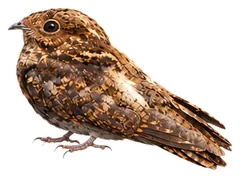 Palau NightjarCaprimulgus phalaena
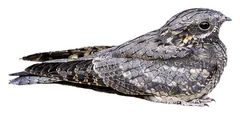 European NightjarCaprimulgus europaeus
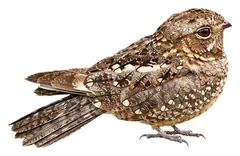 Sombre NightjarCaprimulgus fraenatus
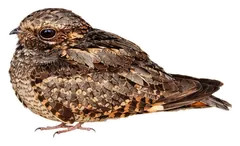 Rufous-cheeked NightjarCaprimulgus rufigena
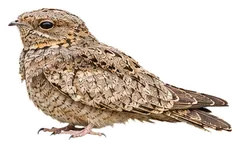 Egyptian NightjarCaprimulgus aegyptius
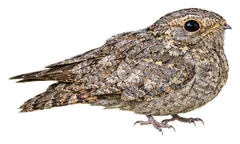 Sykes's NightjarCaprimulgus mahrattensis
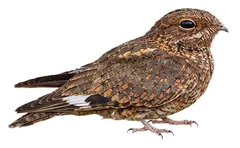 Nubian NightjarCaprimulgus nubicus
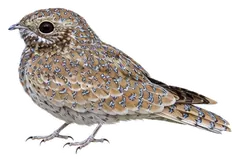 Golden NightjarCaprimulgus eximius
 Jerdon's NightjarCaprimulgus atripennis
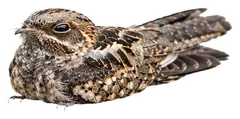
Download illustration
Free to use with credit: “Illustration: Bird Album (birdalbum.com)”. Drawn by AI from a reference photo by Sam Hambly. ↗
Heard it but can't see it? Mingji identifies birds by sound and photo, on your phone.