 Bird Album
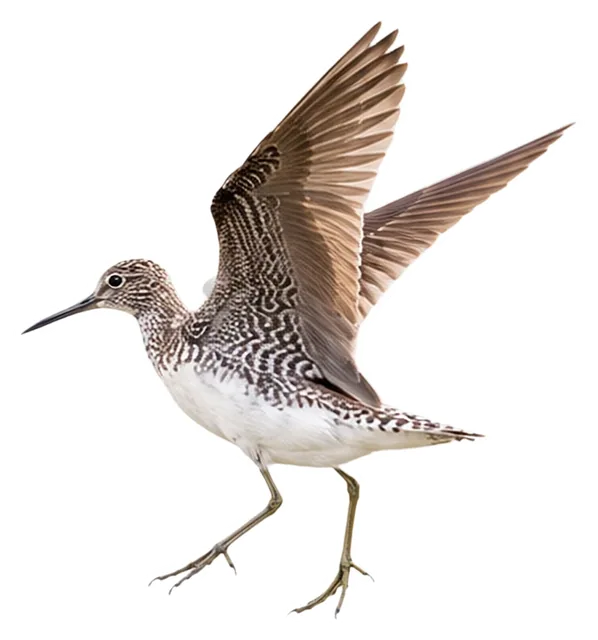
Solitary Sandpiper
Tringa solitaria Wilson, A, 1813
48 gWeight
The solitary sandpiper (Tringa solitaria) is a small shorebird.
Busiest months: May · Most records: United States, Canada, Colombia
Where and when it's recorded

Solitary Sandpiper has been recorded at 1,613 of the 8,171 birding hotspots we track, in 60 countries and regions.
Records by month Northern Hemisphere
Where it's recorded most
- HUNTLEY MEADOWS PARKUnited States3,526 records
- Hornsby BendUnited States3,201 records
- Santa Ana NWRUnited States2,959 records
More places
- Ensley Bottoms – Maxson Wastewater Lagoons/Earth ComplexUnited States2,938 records
- Estero Llano Grande SP WBCUnited States2,839 records
- Galveston – Lafitte's CoveUnited States2,622 records
- Cape Island – South Cape May MeadowsUnited States2,533 records
- Village Creek Drying Beds (PPW-W 083) – ACCESS CLOSED July 2025United States2,357 records
- John Heinz NWR – impoundmentUnited States2,270 records
- Nine Springs Natural AreaUnited States2,091 records
Countries and regions with the most records
eBird records via GBIF up to 2024-12-31. A record means someone listed it; more records partly mean more birders, not more birds.
About
The solitary sandpiper (Tringa solitaria) is a small shorebird. The genus name Tringa is the Neo-Latin name given to the green sandpiper by Aldrovandus in 1599 based on Ancient Greek trungas, a thrush-sized, white-rumped, tail-bobbing wading bird mentioned by Aristotle. The specific solitaria is Latin for "solitary" from solus, "alone".
Excerpt from Wikipedia, CC BY-SA 4.0 · authors · Read more on Wikipedia
Questions
How big is the Solitary Sandpiper?
The Solitary Sandpiper weighs around 48 g.
Where does the Solitary Sandpiper live?
Its breeding range: North America: subarctic to temperate zone taiga muskeg of Nearctic: Alaska mainland (except far northern), northwest to southwestern Canada, eastern south of Hudson and James bays and north of Great Lakes to eastern Quebec (at least). It is most often recorded in United States, Canada and Colombia.
When is the best time to see the Solitary Sandpiper?
At the hotspots we track, it is recorded most in May (Northern Hemisphere).
Is the Solitary Sandpiper endangered?
The IUCN Red List classifies the Solitary Sandpiper as Least Concern.
What does the Solitary Sandpiper eat?
Main food: Fish, shrimp & shellfish.
What family is the Solitary Sandpiper in?
It belongs to the family Sandpipers, Snipes (Scolopacidae), order Charadriiformes.
At a glance
- Weight
- 48 g
- Habitat
- Wetland
- Diet
- Fish, shrimp & shellfish
- Lifestyle
- Active on the ground
- Migration
- Migratory
- Conservation
- Least Concern
More measurements
- Wing
- 127 mm
- Tail
- 54 mm
- Bill
- 33 mm
- Tarsus
- 30 mm
Averages from the AVONET dataset; length from field guides where available.
Range
North America: subarctic to temperate zone taiga muskeg of Nearctic: Alaska mainland (except far northern), northwest to southwestern Canada, eastern south of Hudson and James bays and north of Great Lakes to eastern Quebec (at least)
Breeding range, IOC World Bird List 15.2
Classification
- Order
- Charadriiformes
- Family
- Sandpipers, Snipes Scolopacidae
- Genus
- Tringa
Other birds in the genus Tringa
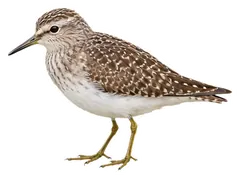 Green SandpiperTringa ochropus
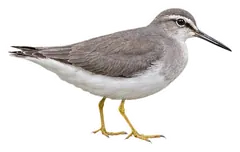 Grey-tailed TattlerTringa brevipes
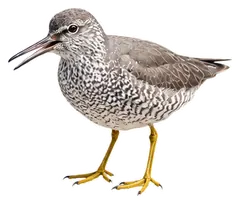 Wandering TattlerTringa incana
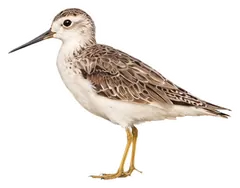 Marsh SandpiperTringa stagnatilis
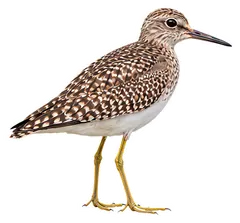 Wood SandpiperTringa glareola
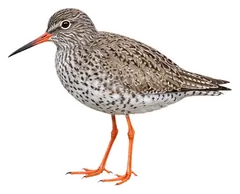 Common RedshankTringa totanus
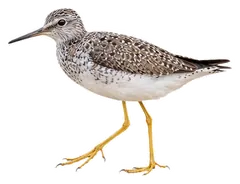 Lesser YellowlegsTringa flavipes
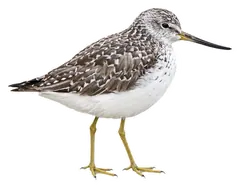 Nordmann's GreenshankTringa guttifer
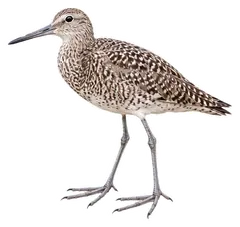 WilletTringa semipalmata
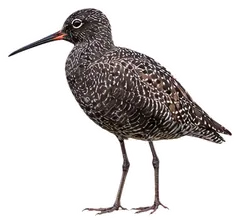 Spotted RedshankTringa erythropus
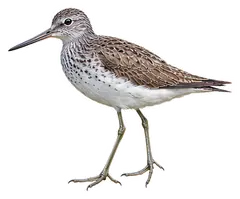 Common GreenshankTringa nebularia
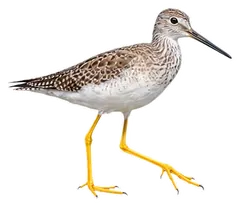 Greater YellowlegsTringa melanoleuca
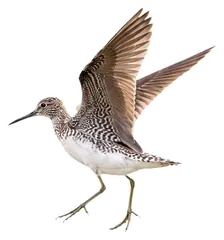
Download illustration
Free to use with credit: “Illustration: Bird Album (birdalbum.com)”. Drawn by AI from a reference photo by John D Reynolds. ↗
Heard it but can't see it? Mingji identifies birds by sound and photo, on your phone.
In other languages
- EnglishSolitary Sandpiper
- 简体中文褐腰草鹬
- 繁體中文孤鷸
- 日本語コシグロクサシギ
- DeutschEinsiedelwasserläufer
- FrançaisChevalier solitaire
- EspañolAndarríos solitario
- Portuguêsmaçarico-solitário
- ItalianoPiro piro solitario
- NederlandsAmerikaanse Bosruiter
- РусскийУлит-отшельник
- Svenskaamerikansk skogssnäppa
- DanskAmerikansk Svaleklire
- Polskibrodziec ciemnorzytny