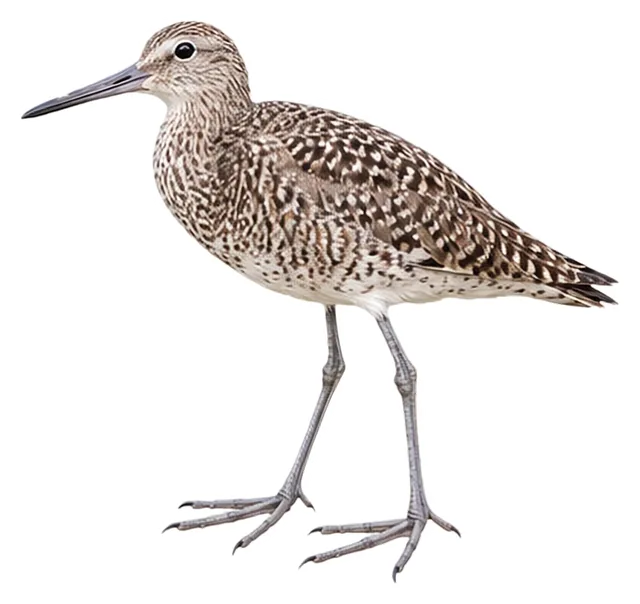
Willet
Tringa semipalmata (Gmelin, JF, 1789)
31–41 cmLength246 gWeight
The saltmarsh willet or willet (Tringa semipalmata) is a large shorebird in the family Scolopacidae.
Busiest months: April–May · Most records: United States, Canada, Mexico
Where and when it's recorded
Busiest months: April–May · Most records: United States, Canada, Mexico

Willet has been recorded at 889 of the 8,276 birding hotspots we track, in 51 countries and regions.
Records by month Northern Hemisphere
Where it's recorded most
- Fort De Soto ParkUnited States18,997 records
- Parker River NWRUnited States12,825 records
- Bolsa Chica Ecological ReserveUnited States12,233 records
More places
- San Diego River mudflatsUnited States11,658 records
- Edwin B. Forsythe NWRUnited States9,794 records
- South Padre Is. – WBC/Conv. Center/Laguna Madre TrailUnited States8,717 records
- South Padre Is. – Birding and Nature CenterUnited States8,429 records
- Moss Landing – Jetty Road, north jetty & State BeachUnited States8,188 records
- Bolivar Flats Shorebird SanctuaryUnited States7,985 records
- J. N. Ding Darling NWR – Wildlife DriveUnited States7,725 records
Countries and regions with the most records
eBird records via GBIF up to 2024-12-31. A record means someone listed it; more records partly mean more birders, not more birds.
About
The saltmarsh willet or willet (Tringa semipalmata) is a large shorebird in the family Scolopacidae. It is a relatively large and robust sandpiper and is the largest of the species called "shanks" in the genus Tringa. Its closest relative is the lesser yellowlegs, a much smaller bird with a very different appearance apart from the fine, clear, and dense pattern of the neck, which both species show in breeding plumage.
Excerpt from Wikipedia, CC BY-SA 4.0 · authors · Read more on Wikipedia
Questions
How big is the Willet?
The Willet is about 31–41 cm long and weighs around 246 g.
Where does the Willet live?
Its breeding range: North America: temperate zone prairie wetlands and coastal saltmarshes of west-central, eastern, southeastern Canada and USA: inland central Alberta to southwestern Manitoba, south to northeastern California and northern Nebraska; coastal Newfoundland to Florida and Gulf of Mexico south to Tamaulipas; Bahamas, most Greater Antilles, scattered islands elsewhere in Caribbean including Los Roques (north of Venezuela). It is most often recorded in United States, Canada and Mexico.
When is the best time to see the Willet?
At the hotspots we track, it is recorded most in April and May (Northern Hemisphere).
Is the Willet endangered?
The IUCN Red List classifies the Willet as Least Concern.
What does the Willet eat?
Main food: Fish, shrimp & shellfish.
What family is the Willet in?
It belongs to the family Sandpipers, Snipes (Scolopacidae), order Charadriiformes.
At a glance
- Length
- 31–41 cm
- Weight
- 246 g
- Habitat
- Coast & tidal flats
- Diet
- Fish, shrimp & shellfish
- Lifestyle
- Active on the ground
- Migration
- Migratory
- Conservation
- Least Concern
More measurements
- Wing
- 204 mm
- Tail
- 74 mm
- Bill
- 67 mm
- Tarsus
- 65 mm
Averages from the AVONET dataset; length from field guides where available.
Range
North America: temperate zone prairie wetlands and coastal saltmarshes of west-central, eastern, southeastern Canada and USA: inland central Alberta to southwestern Manitoba, south to northeastern California and northern Nebraska; coastal Newfoundland to Florida and Gulf of Mexico south to Tamaulipas; Bahamas, most Greater Antilles, scattered islands elsewhere in Caribbean including Los Roques (north of Venezuela)
Breeding range, IOC World Bird List 15.2
Classification
- Order
- Charadriiformes
- Family
- Sandpipers, Snipes Scolopacidae
- Genus
- Tringa
Other birds in the genus Tringa
 Green SandpiperTringa ochropus
 Solitary SandpiperTringa solitaria
 Grey-tailed TattlerTringa brevipes
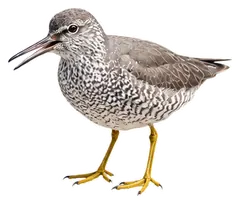 Wandering TattlerTringa incana
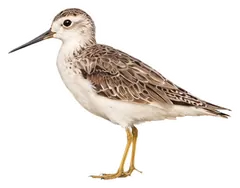 Marsh SandpiperTringa stagnatilis
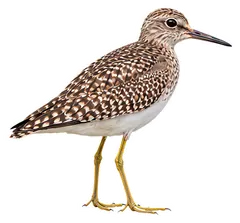 Wood SandpiperTringa glareola
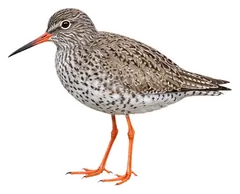 Common RedshankTringa totanus
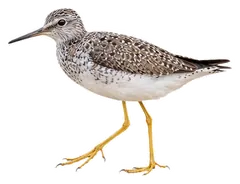 Lesser YellowlegsTringa flavipes
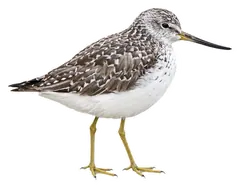 Nordmann's GreenshankTringa guttifer
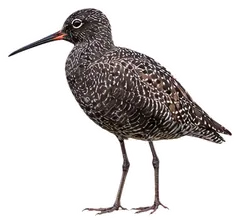 Spotted RedshankTringa erythropus
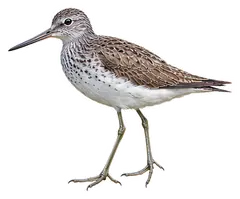 Common GreenshankTringa nebularia
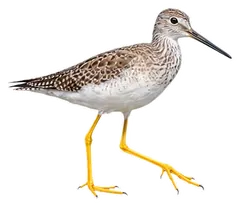 Greater YellowlegsTringa melanoleuca
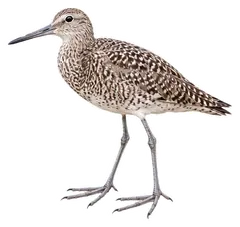
Download illustration
Free to use with credit: “Illustration: Bird Album (birdalbum.com)”. Drawn by AI from a reference photo by kindjay. ↗
Heard it but can't see it? Mingji identifies birds by sound and photo, on your phone.