 Bird Album
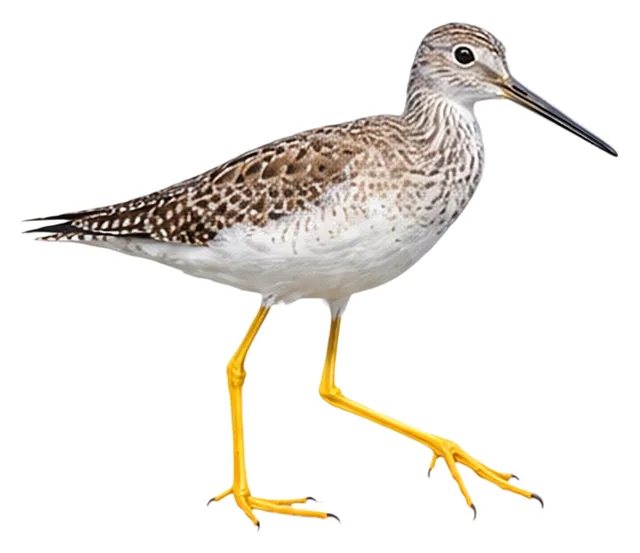
Greater Yellowlegs
Tringa melanoleuca (Gmelin, JF, 1789)
29–40 cmLength162 gWeight
The greater yellowlegs (Tringa melanoleuca) is a large shorebird in the family Scolopacidae.
Busiest months: April and August–October · Most records: United States, Canada, Chile
Where and when it's recorded

Greater Yellowlegs has been recorded at 1,595 of the 8,171 birding hotspots we track, in 61 countries and regions.
Records by month Northern Hemisphere
Where it's recorded most
- Parker River NWRUnited States22,562 records
- Edwin B. Forsythe NWRUnited States17,464 records
- Bombay Hook National Wildlife RefugeUnited States15,911 records
More places
- Cape Island – South Cape May MeadowsUnited States13,969 records
- Billy Frank Jr. Nisqually NWRUnited States12,745 records
- Edwin B. Forsythe NWR – Wildlife DriveUnited States12,240 records
- Reifel Bird SanctuaryCanada9,778 records
- Riparian Preserve at Gilbert Water RanchUnited States9,714 records
- Merritt Island NWR – Black Point Wildlife DriveUnited States9,104 records
- Hagerman NWRUnited States8,806 records
Countries and regions with the most records
eBird records via GBIF up to 2024-12-31. A record means someone listed it; more records partly mean more birders, not more birds.
About
The greater yellowlegs (Tringa melanoleuca) is a large shorebird in the family Scolopacidae. It breeds in central Canada and southern Alaska and winters in southern North America, Central America, the West Indies and South America.
Excerpt from Wikipedia, CC BY-SA 4.0 · authors · Read more on Wikipedia
Questions
How big is the Greater Yellowlegs?
The Greater Yellowlegs is about 29–40 cm long and weighs around 162 g.
Where does the Greater Yellowlegs live?
Its breeding range: North America: (mainly) temperate taiga muskeg of Nearctic: southern Alaska and southwestern Canada through southern tier of Canadian provinces to eastern Labrador (eastern Canada). It is most often recorded in United States, Canada and Chile.
When is the best time to see the Greater Yellowlegs?
At the hotspots we track, it is recorded most in April, August, September and October (Northern Hemisphere).
Is the Greater Yellowlegs endangered?
The IUCN Red List classifies the Greater Yellowlegs as Near Threatened.
What does the Greater Yellowlegs eat?
Main food: Fish, shrimp & shellfish.
What family is the Greater Yellowlegs in?
It belongs to the family Sandpipers, Snipes (Scolopacidae), order Charadriiformes.
At a glance
- Length
- 29–40 cm
- Weight
- 162 g
- Habitat
- Wetland
- Diet
- Fish, shrimp & shellfish
- Lifestyle
- Active on the ground
- Migration
- Migratory
- Conservation
- Near Threatened
More measurements
- Wing
- 194 mm
- Tail
- 80 mm
- Bill
- 60 mm
- Tarsus
- 60 mm
Averages from the AVONET dataset; length from field guides where available.
Range
North America: (mainly) temperate taiga muskeg of Nearctic: southern Alaska and southwestern Canada through southern tier of Canadian provinces to eastern Labrador (eastern Canada)
Breeding range, IOC World Bird List 15.2
Classification
- Order
- Charadriiformes
- Family
- Sandpipers, Snipes Scolopacidae
- Genus
- Tringa
Other birds in the genus Tringa
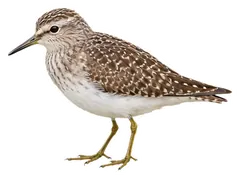 Green SandpiperTringa ochropus
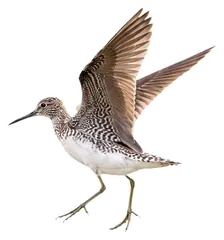 Solitary SandpiperTringa solitaria
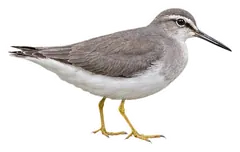 Grey-tailed TattlerTringa brevipes
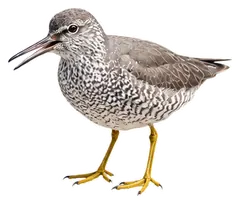 Wandering TattlerTringa incana
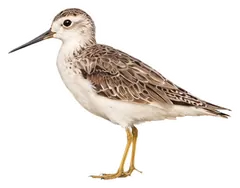 Marsh SandpiperTringa stagnatilis
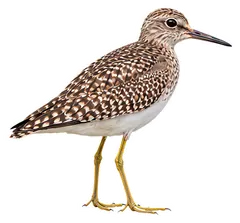 Wood SandpiperTringa glareola
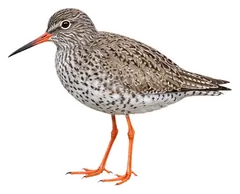 Common RedshankTringa totanus
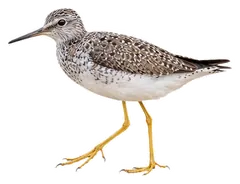 Lesser YellowlegsTringa flavipes
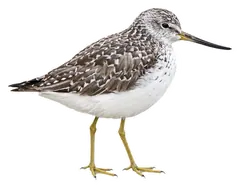 Nordmann's GreenshankTringa guttifer
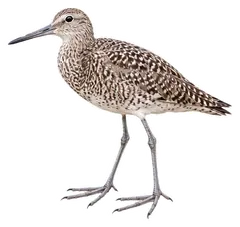 WilletTringa semipalmata
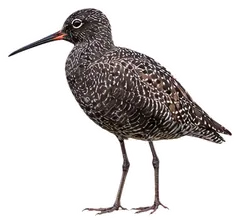 Spotted RedshankTringa erythropus
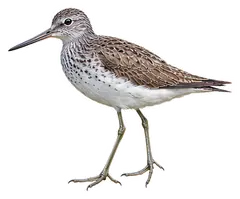 Common GreenshankTringa nebularia
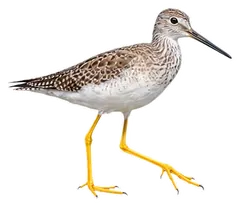
Download illustration
Free to use with credit: “Illustration: Bird Album (birdalbum.com)”. Drawn by AI from a reference photo by Javier Chiavone. ↗
Heard it but can't see it? Mingji identifies birds by sound and photo, on your phone.
In other languages
- EnglishGreater Yellowlegs
- 简体中文大黄脚鹬
- 繁體中文大黃腳鷸
- 日本語オオキアシシギ
- 한국어큰노랑발도요
- DeutschTüpfelgelbschenkel
- FrançaisGrand Chevalier
- EspañolArchibebe patigualdo grande
- Portuguêsperna-amarela-grande
- ItalianoTotano zampegialle maggiore
- NederlandsGrote Geelpootruiter
- РусскийПёстрый улит
- Svenskastörre gulbena
- DanskStor Gulben
- Polskibrodziec piegowaty