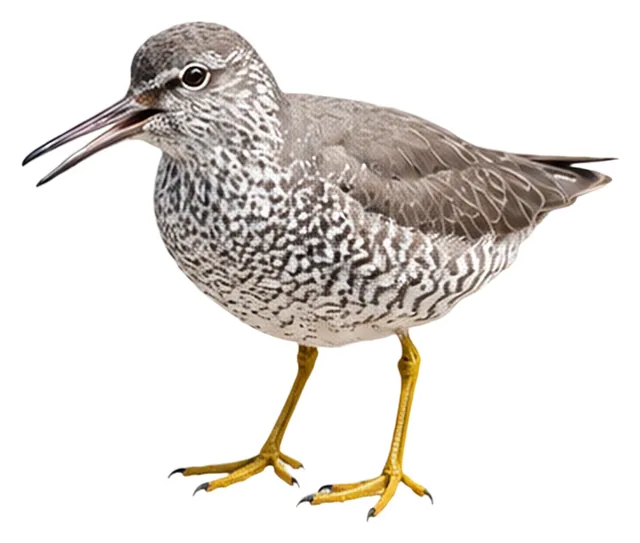
Wandering Tattler
Tringa incana (Gmelin, JF, 1789)
26–30 cmLength50–55 cmWingspan108 gWeight
This medium-sized sandpiper has a gray back and white belly, and bobs its head rapidly while foraging in water.
Busiest months: September · Most records: United States, U.S. Outlying Islands, French Polynesia
How to identify
Field marks
- Upperparts, face and neck gray; belly white
- Legs and feet short and deep yellow
- Bill dark gray
- Belly distinctly barred in breeding plumage
Voice
A rapid, increasingly hurried, staccato trill of 3–4 syllables per call.
Where and when it's recorded
Busiest months: September · Most records: United States, U.S. Outlying Islands, French Polynesia

Wandering Tattler has been recorded at 202 of the 8,276 birding hotspots we track, in 33 countries and regions.
Records by month Northern Hemisphere
Where it's recorded most
- Southeast Farallon IslandUnited States10,357 records
- St. Paul IslandUnited States4,651 records
- Pillar Point HarborUnited States1,306 records
More places
- Midway Atoll – Water Catchment AreaU.S. Outlying Islands801 records
- Fort MasonUnited States708 records
- Pt. PinosUnited States679 records
- Pt. Reyes – Fish DocksUnited States361 records
- Pt. Pinos – seawatch onlyUnited States345 records
- Midway Atoll NWR – Sand IslandU.S. Outlying Islands330 records
- GambellUnited States311 records
Countries and regions with the most records
eBird records via GBIF up to 2024-12-31. A record means someone listed it; more records partly mean more birders, not more birds.
About
The wandering tattler (Tringa incana) is a medium-sized shorebird, similar in appearance to the closely related gray-tailed tattler (T. brevipes). The tattlers are unique among the species of Tringa for having unpatterned, greyish wings and backs, and a scaly breast pattern extending more or less onto the belly in breeding plumage, in which both also have a rather prominent supercilium.
Excerpt from Wikipedia, CC BY-SA 4.0 · authors · Read more on Wikipedia
Questions
How big is the Wandering Tattler?
The Wandering Tattler is about 26–30 cm long, with a wingspan of 50–55 cm and weighs around 108 g.
Where does the Wandering Tattler live?
Its breeding range: Palearctic, North America: subarctic montane tundra of far northeastern Palearctic and northwestern Nearctic: Chukotka (northeastern Siberia), Alaska mainland (except far northern), Yukon, far Northwest Territories and northwestern British Columbia (northwestern Canada). It is most often recorded in United States, U.S. Outlying Islands and French Polynesia.
When is the best time to see the Wandering Tattler?
At the hotspots we track, it is recorded most in September (Northern Hemisphere).
Is the Wandering Tattler endangered?
The IUCN Red List classifies the Wandering Tattler as Least Concern.
What does the Wandering Tattler eat?
Main food: Fish, shrimp & shellfish.
What family is the Wandering Tattler in?
It belongs to the family Sandpipers, Snipes (Scolopacidae), order Charadriiformes.
At a glance
- Length
- 26–30 cm
- Wingspan
- 50–55 cm
- Weight
- 108 g
- Habitat
- Wetland
- Diet
- Fish, shrimp & shellfish
- Lifestyle
- Active on the ground
- Migration
- Migratory
- Conservation
- Least Concern
More measurements
- Wing
- 165 mm
- Tail
- 72 mm
- Bill
- 45 mm
- Tarsus
- 33 mm
Averages from the AVONET dataset; length from field guides where available.
Range
Palearctic, North America: subarctic montane tundra of far northeastern Palearctic and northwestern Nearctic: Chukotka (northeastern Siberia), Alaska mainland (except far northern), Yukon, far Northwest Territories and northwestern British Columbia (northwestern Canada)
Breeding range, IOC World Bird List 15.2
Classification
- Order
- Charadriiformes
- Family
- Sandpipers, Snipes Scolopacidae
- Genus
- Tringa
Other birds in the genus Tringa
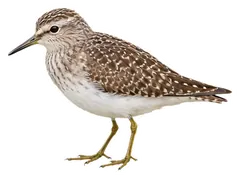 Green SandpiperTringa ochropus
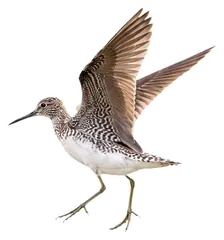 Solitary SandpiperTringa solitaria
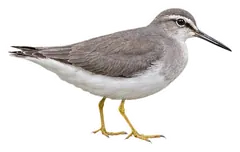 Grey-tailed TattlerTringa brevipes
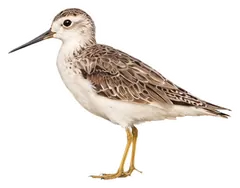 Marsh SandpiperTringa stagnatilis
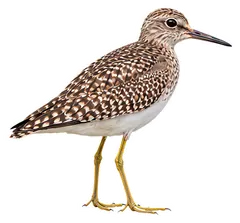 Wood SandpiperTringa glareola
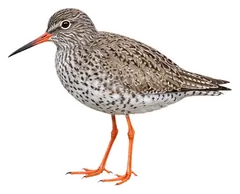 Common RedshankTringa totanus
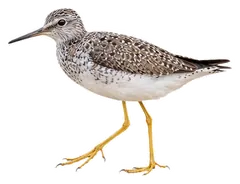 Lesser YellowlegsTringa flavipes
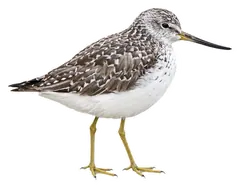 Nordmann's GreenshankTringa guttifer
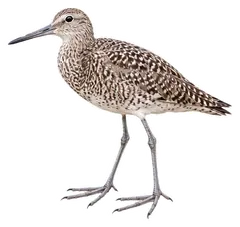 WilletTringa semipalmata
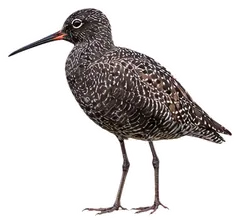 Spotted RedshankTringa erythropus
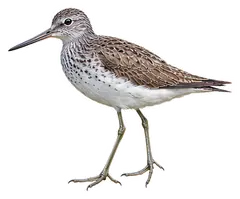 Common GreenshankTringa nebularia
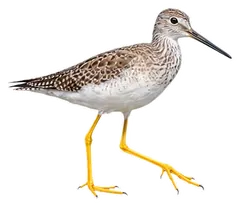 Greater YellowlegsTringa melanoleuca
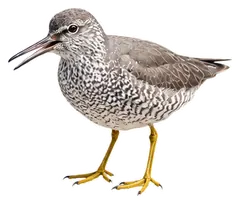
Download illustration
Free to use with credit: “Illustration: Bird Album (birdalbum.com)”. Drawn by AI from a reference photo by Cameron Eckert. ↗
Heard it but can't see it? Mingji identifies birds by sound and photo, on your phone.
In other languages
- EnglishWandering Tattler
- 简体中文漂鹬
- 繁體中文美洲黃足鷸
- 日本語メリケンキアシシギ
- DeutschWanderwasserläufer
- FrançaisChevalier errant
- EspañolPlayero de Alaska
- Portuguêsmaçarico-errante
- ItalianoTotano vagabondo
- NederlandsAmerikaanse Grijze Ruiter
- РусскийАмериканский пепельный улит
- Svenskaamerikansk gråsnäppa
- DanskAmerikansk Gråklire
- Polskibrodziec alaskański