Spotted Redshank
Tringa erythropus (Pallas, 1764)
29–31 cmLength64 cmWingspan158 gWeight
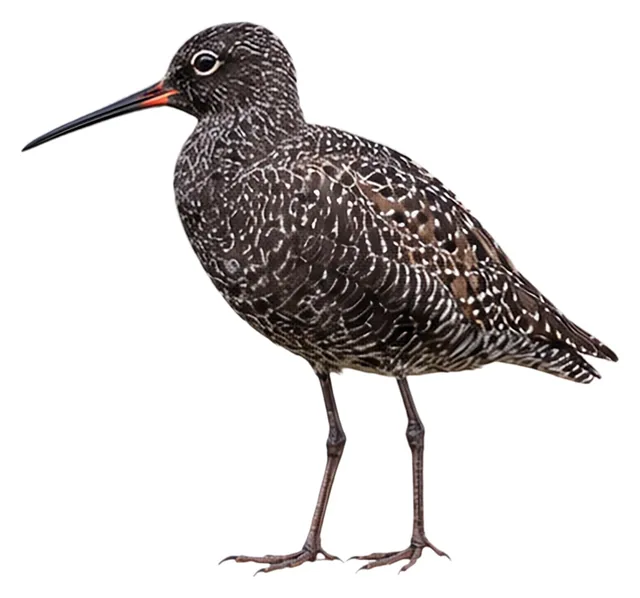
This large sandpiper is black in breeding plumage and very pale in winter plumage, with red legs and feet that turn dark gray in the breeding season.
Busiest months: April and August–September · Most records: United Kingdom, China, Spain
How to identify
Field marks
- Breeding plumage black with white spots; winter plumage very pale
- Legs and feet red, turning dark gray in the breeding season
- White oval on the back in flight
Male, female and young
Juvenile is gray-brown, with small white spots on the upperparts and fine barring on the pale underparts.
Voice
A squeaky whistle, “teu-it”; the warning call is “kyip-kyip-kyip”.
Where and when it's recorded
Busiest months: April and August–September · Most records: United Kingdom, China, Spain

Spotted Redshank has been recorded at 1,720 of the 8,276 birding hotspots we track, in 109 countries and regions.
Records by month Northern Hemisphere
Where it's recorded most
- Titchwell Marsh RSPB ReserveUnited Kingdom2,726 records
- Minsmere RSPB ReserveUnited Kingdom2,306 records
- Mai Po Nature ReserveHong Kong (China)1,790 records
More places
- Frampton Marsh RSPB ReserveUnited Kingdom1,601 records
- Pak Thale Nature ReserveThailand1,556 records
- Cley & Salthouse Marshes NWT NR – Cley Marshes including Hides and Visitor CentreUnited Kingdom1,450 records
- L'Albufera PNat – El Raco de l'OllaSpain1,169 records
- Eilat – KM20 Flamingo Pools 20Israel1,139 records
- Lezíria Grande de Vila Franca de Xira – área geralPortugal889 records
- WWT Slimbridge Wetland CentreUnited Kingdom851 records
Countries and regions with the most records
eBird records via GBIF up to 2024-12-31. A record means someone listed it; more records partly mean more birders, not more birds.
About
The spotted redshank (Tringa erythropus) is a wader (shorebird) in the large bird family Scolopacidae. It breeds across northern Scandinavia and the northern Palearctic and migrates south to the Mediterranean, the southern British Isles, France, tropical Africa, and tropical Asia for the winter. It is an occasional vagrant to Australia and North America.
Excerpt from Wikipedia, CC BY-SA 4.0 · authors · Read more on Wikipedia
Questions
How big is the Spotted Redshank?
The Spotted Redshank is about 29–31 cm long, with a wingspan of 64 cm and weighs around 158 g.
Where does the Spotted Redshank live?
Its breeding range: Palearctic: low Arctic to subarctic wooded tundra of northern Palearctic: northern, central Scandinavia east through inland Russia to central Chukotskiy Peninsula (northeastern Siberia). It is most often recorded in United Kingdom, China and Spain.
When is the best time to see the Spotted Redshank?
At the hotspots we track, it is recorded most in April, August and September (Northern Hemisphere).
Is the Spotted Redshank endangered?
The IUCN Red List classifies the Spotted Redshank as Least Concern.
What does the Spotted Redshank eat?
Main food: Fish, shrimp & shellfish.
What family is the Spotted Redshank in?
It belongs to the family Sandpipers, Snipes (Scolopacidae), order Charadriiformes.
At a glance
- Length
- 29–31 cm
- Wingspan
- 64 cm
- Weight
- 158 g
- Habitat
- Grassland
- Diet
- Fish, shrimp & shellfish
- Lifestyle
- Active on the ground
- Migration
- Migratory
- Conservation
- Least Concern
More measurements
- Wing
- 163 mm
- Tail
- 63 mm
- Bill
- 63 mm
- Tarsus
- 57 mm
Averages from the AVONET dataset; length from field guides where available.
Range
Palearctic: low Arctic to subarctic wooded tundra of northern Palearctic: northern, central Scandinavia east through inland Russia to central Chukotskiy Peninsula (northeastern Siberia)
Breeding range, IOC World Bird List 15.2
Classification
- Order
- Charadriiformes
- Family
- Sandpipers, Snipes Scolopacidae
- Genus
- Tringa
Other birds in the genus Tringa
 Green SandpiperTringa ochropus
 Solitary SandpiperTringa solitaria
 Grey-tailed TattlerTringa brevipes
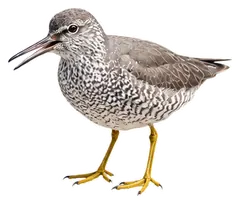 Wandering TattlerTringa incana
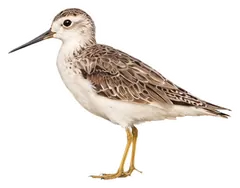 Marsh SandpiperTringa stagnatilis
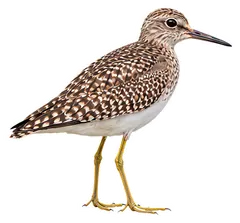 Wood SandpiperTringa glareola
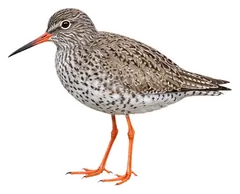 Common RedshankTringa totanus
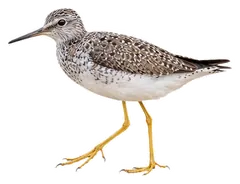 Lesser YellowlegsTringa flavipes
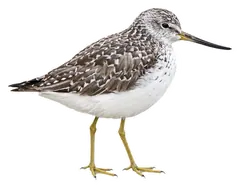 Nordmann's GreenshankTringa guttifer
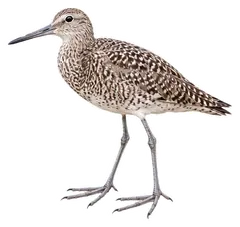 WilletTringa semipalmata
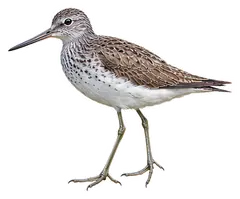 Common GreenshankTringa nebularia
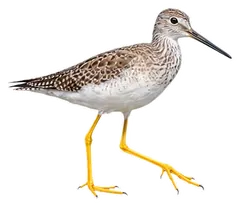 Greater YellowlegsTringa melanoleuca
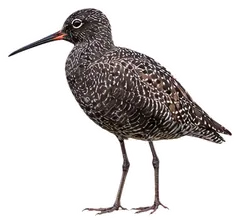
Download illustration
Free to use with credit: “Illustration: Bird Album (birdalbum.com)”. Drawn by AI from a reference photo by Hari K Patibanda. ↗

Heard it but can't see it? Mingji identifies birds by sound and photo, on your phone.