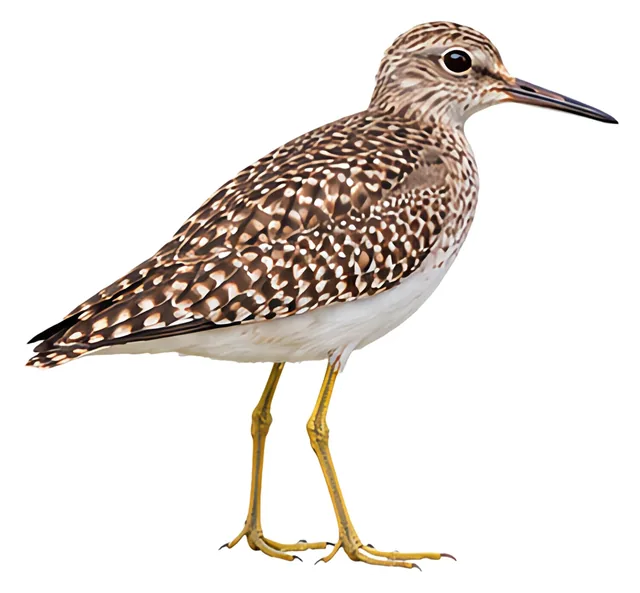
Wood Sandpiper
Tringa glareola Linnaeus, 1758
≈22 cmLength40 cmWingspan62 gWeight
This small, slender sandpiper has yellow legs and feet and a rufous back, resembling a longer-legged Green Sandpiper.
Busiest months: April · Most records: India, China, Spain
Looks like Green Sandpiper
How to identify
Field marks
- Legs and feet relatively long and yellow
- White rump patch smaller and less contrasting than Green Sandpiper's
- Bill shorter and more slender than Green Sandpiper's
- Back rufous
Similar species
Where and when it's recorded
Busiest months: April · Most records: India, China, Spain

Wood Sandpiper has been recorded at 2,849 of the 8,276 birding hotspots we track, in 157 countries and regions.
Records by month Northern Hemisphere
Where it's recorded most
- Changaram Wetlands – EzhupunnaIndia3,281 records
- Bharatpur – Keoladeo Ghana NPIndia2,451 records
- Saul Kere / Sowl KereIndia2,208 records
More places
- International Birding and Research Center Eilat (IBRCE)Israel2,129 records
- Taipei – Tianliaoyang WetlandTaiwan (China)1,990 records
- Long ValleyHong Kong (China)1,943 records
- Eilat – KM20 Flamingo Pools 20Israel1,861 records
- Mai Po Nature ReserveHong Kong (China)1,783 records
- Krishnampathi Lake, SeeranaickenpalayamIndia1,745 records
- Dapingding and Xucuogang IBA – Dayuan LitcuoTaiwan (China)1,676 records
Countries and regions with the most records
eBird records via GBIF up to 2024-12-31. A record means someone listed it; more records partly mean more birders, not more birds.
About
The wood sandpiper (Tringa glareola) is a small wader belonging to the sandpiper family Scolopacidae. A Eurasian species, it is the smallest of the shanks, a genus of mid-sized, long-legged waders that largely inhabit freshwater and wetland environments, as opposed to the maritime or coastal habitats of other, similar species.
Excerpt from Wikipedia, CC BY-SA 4.0 · authors · Read more on Wikipedia
Questions
How big is the Wood Sandpiper?
The Wood Sandpiper is about ≈22 cm long, with a wingspan of 40 cm and weighs around 62 g.
Where does the Wood Sandpiper live?
Its breeding range: Palearctic: inland subarctic to temperate wooded wetlands of northern Palearctic: Scotland (northern British Isles), northern Scandinavia, Austria east through inland northern Russia to western Chukotskiy Peninsula, to eastern Siberia and northeastern China, in south through northern Mongolia, northeastern China, Kamchatka and Commander Islands (eastern Russia). It is most often recorded in India, China and Spain.
When is the best time to see the Wood Sandpiper?
At the hotspots we track, it is recorded most in April (Northern Hemisphere).
Is the Wood Sandpiper endangered?
The IUCN Red List classifies the Wood Sandpiper as Least Concern.
What does the Wood Sandpiper eat?
Main food: Fish, shrimp & shellfish.
What family is the Wood Sandpiper in?
It belongs to the family Sandpipers, Snipes (Scolopacidae), order Charadriiformes.
At a glance
- Length
- ≈22 cm
- Wingspan
- 40 cm
- Weight
- 62 g
- Habitat
- Wetland
- Diet
- Fish, shrimp & shellfish
- Lifestyle
- Active on the ground
- Migration
- Migratory
- Conservation
- Least Concern
More measurements
- Wing
- 124 mm
- Tail
- 49 mm
- Bill
- 32 mm
- Tarsus
- 35 mm
Averages from the AVONET dataset; length from field guides where available.
Range
Palearctic: inland subarctic to temperate wooded wetlands of northern Palearctic: Scotland (northern British Isles), northern Scandinavia, Austria east through inland northern Russia to western Chukotskiy Peninsula, to eastern Siberia and northeastern China, in south through northern Mongolia, northeastern China, Kamchatka and Commander Islands (eastern Russia)
Breeding range, IOC World Bird List 15.2
Classification
- Order
- Charadriiformes
- Family
- Sandpipers, Snipes Scolopacidae
- Genus
- Tringa
Other birds in the genus Tringa
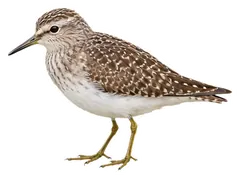 Green SandpiperTringa ochropus
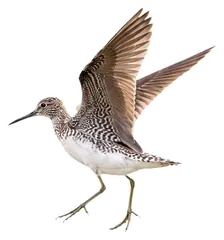 Solitary SandpiperTringa solitaria
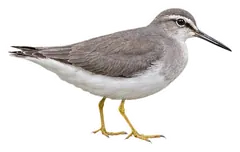 Grey-tailed TattlerTringa brevipes
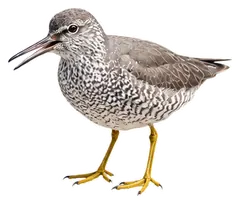 Wandering TattlerTringa incana
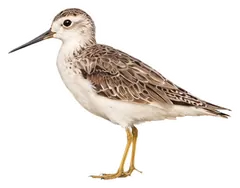 Marsh SandpiperTringa stagnatilis
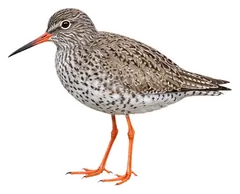 Common RedshankTringa totanus
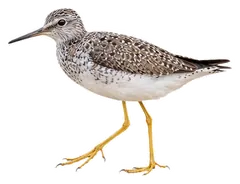 Lesser YellowlegsTringa flavipes
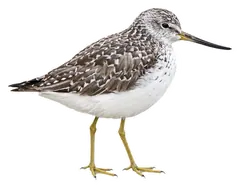 Nordmann's GreenshankTringa guttifer
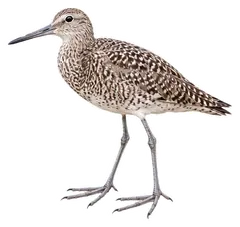 WilletTringa semipalmata
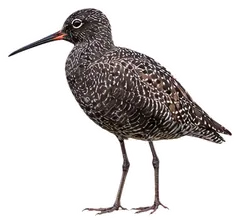 Spotted RedshankTringa erythropus
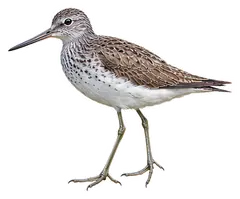 Common GreenshankTringa nebularia
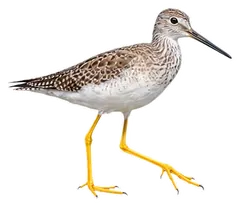 Greater YellowlegsTringa melanoleuca
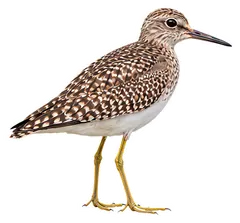
Download illustration
Free to use with credit: “Illustration: Bird Album (birdalbum.com)”. Drawn by AI from a reference photo by Abdul Momin. ↗

Heard it but can't see it? Mingji identifies birds by sound and photo, on your phone.