 Bird Album
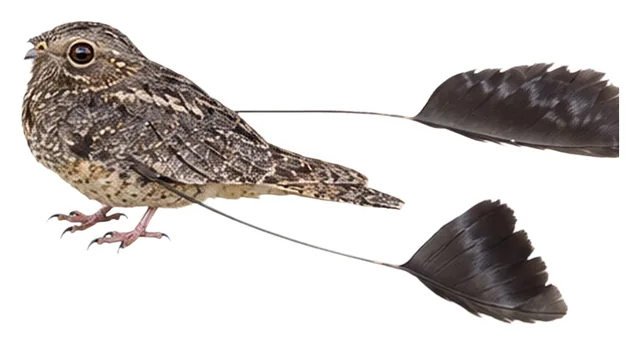
Standard-winged Nightjar
Caprimulgus longipennis Shaw, 1796
20–23 cmLength48 gWeight
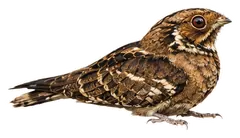
The standard-winged nightjar (Caprimulgus longipennis) is a nocturnal bird in the nightjar family.
Busiest months: March and December · Most records: Ghana, Gambia, Cameroon
Where and when it's recorded

Standard-winged Nightjar has been recorded at 56 of the 8,171 birding hotspots we track, in 16 countries and regions.
Records by month Northern Hemisphere
Where it's recorded most
- Mole NP – Asibey Loop/Haraba track vicinityGhana137 records
- Mole NPGhana127 records
- Farasuto Forest Community NRGambia42 records
More places
- Ngaoundaba RanchCameroon31 records
- Mole NP – Mole Hotel & waterholeGhana20 records
- Campement de WassadouSenegal18 records
- Benoue NPCameroon17 records
- TendabaGambia15 records
- Mole NP – Samole loopGhana15 records
- Tono Dam & vicinityGhana15 records
Countries and regions with the most records
eBird records via GBIF up to 2024-12-31. A record means someone listed it; more records partly mean more birders, not more birds.
About
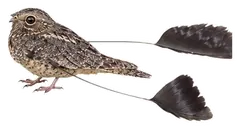
The standard-winged nightjar (Caprimulgus longipennis) is a nocturnal bird in the nightjar family. Previously placed with the pennant-winged nightjar (Caprimulgus vexillarius) in their own genus, Macrodipteryx, it is native to Africa and displays extreme sexual dimorphism. During the breeding season, males will grow broad ornamental flight feathers longer than their body.
Excerpt from Wikipedia, CC BY-SA 4.0 · authors · Read more on Wikipedia
Questions
How big is the Standard-winged Nightjar?
The Standard-winged Nightjar is about 20–23 cm long and weighs around 48 g.
Where does the Standard-winged Nightjar live?
Its breeding range: Africa: Senegal and Gambia to Liberia, east to southwestern Sudan and Uganda. It is most often recorded in Ghana, Gambia and Cameroon.
When is the best time to see the Standard-winged Nightjar?
At the hotspots we track, it is recorded most in March and December (Northern Hemisphere).
Is the Standard-winged Nightjar endangered?
The IUCN Red List classifies the Standard-winged Nightjar as Least Concern.
What does the Standard-winged Nightjar eat?
Main food: Insects & other invertebrates.
What family is the Standard-winged Nightjar in?
It belongs to the family Nightjars (Caprimulgidae), order Caprimulgiformes.
At a glance
- Length
- 20–23 cm
- Weight
- 48 g
- Habitat
- Grassland
- Diet
- Insects & other invertebrates
- Lifestyle
- Feeds in the air
- Migration
- Partial migrant
- Conservation
- Least Concern
More measurements
- Wing
- 173 mm
- Tail
- 102 mm
- Bill
- 16 mm
- Tarsus
- 20 mm
Averages from the AVONET dataset; length from field guides where available.
Range
Africa: Senegal and Gambia to Liberia, east to southwestern Sudan and Uganda
Breeding range, IOC World Bird List 15.2
Classification
- Order
- Caprimulgiformes
- Family
- Nightjars Caprimulgidae
- Genus
- Caprimulgus
Other birds in the genus Caprimulgus
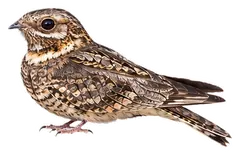 Red-necked NightjarCaprimulgus ruficollis
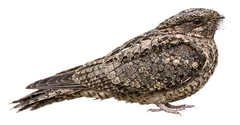 Jungle NightjarCaprimulgus indicus
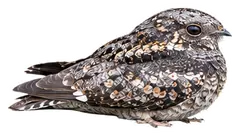 Grey NightjarCaprimulgus jotaka
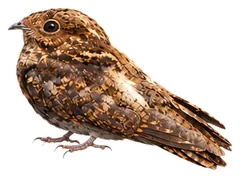 Palau NightjarCaprimulgus phalaena
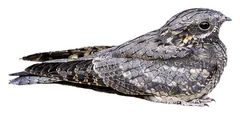 European NightjarCaprimulgus europaeus
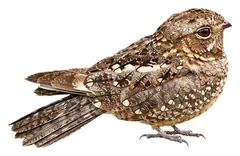 Sombre NightjarCaprimulgus fraenatus
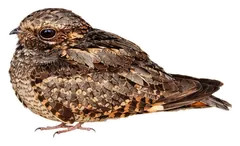 Rufous-cheeked NightjarCaprimulgus rufigena
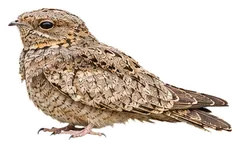 Egyptian NightjarCaprimulgus aegyptius
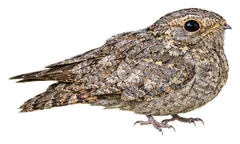 Sykes's NightjarCaprimulgus mahrattensis
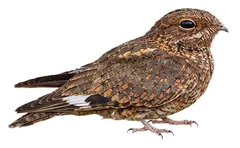 Nubian NightjarCaprimulgus nubicus
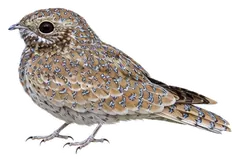 Golden NightjarCaprimulgus eximius
 Jerdon's NightjarCaprimulgus atripennis
Download illustration
Free to use with credit: “Illustration: Bird Album (birdalbum.com)”. Drawn by AI from a reference photo by Niall Perrins. ↗
Heard it but can't see it? Mingji identifies birds by sound and photo, on your phone.
In other languages
- EnglishStandard-winged Nightjar
- 简体中文旗翅夜鹰
- 繁體中文纓翅夜鷹
- 日本語ラケットヨタカ
- DeutschFahnennachtschwalbe
- FrançaisEngoulevent à balanciers
- EspañolChotacabras portaestandarte
- Portuguêsnoitibó-de-galhardetes
- ItalianoSucciacapre vessillario
- NederlandsViervleugelnachtzwaluw
- РусскийЧетырёхкрылый козодой
- Svenskavimpelnattskärra
- DanskStandartvinge
- Polskidziwolotek flagopióry