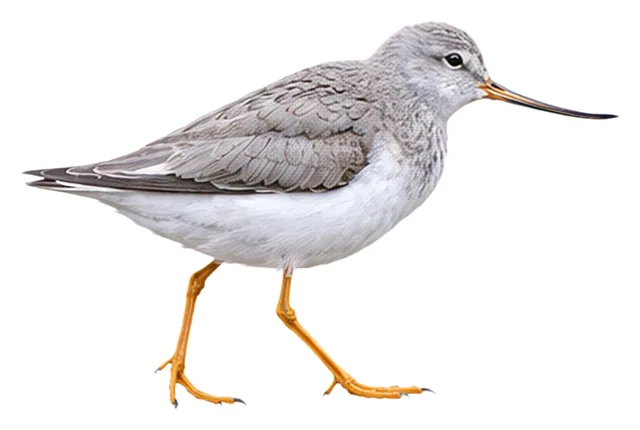
Terek Sandpiper
Xenus cinereus (Güldenstädt, 1775)
≈25 cmLength58 cmWingspan79 gWeight
This small gray sandpiper has a long, upturned bill and yellow legs and feet.
Busiest months: April–May · Most records: China, Australia, Thailand
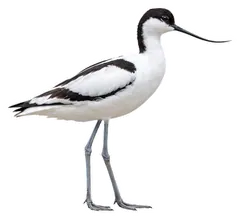
Looks like Pied Avocet
How to identify
Field marks
- Bill long and upturned, yellow at the base and otherwise black
- Back, face and breast gray
- White supercilium, distinct or indistinct
- Belly white; legs and feet yellow
Voice
A high-pitched whistle.
Similar species
Where and when it's recorded
Busiest months: April–May · Most records: China, Australia, Thailand

Terek Sandpiper has been recorded at 873 of the 8,276 birding hotspots we track, in 95 countries and regions.
Records by month Northern Hemisphere
Where it's recorded most
- Cairns EsplanadeAustralia2,630 records
- Mai Po Nature ReserveHong Kong (China)1,277 records
- Pak Thale Nature ReserveThailand1,202 records
More places
- Nanpu MudflatChina813 records
- Sungei Buloh Wetland ReserveSingapore808 records
- Mamachi Wadi Beach, ArnalaIndia682 records
- Cairns Esplanade – Southern EndAustralia603 records
- Crab Creek MangrovesAustralia577 records
- Kinmen – Wujiang River EstuaryChina555 records
- Dapingding and Xucuogang IBA – XucuogangTaiwan (China)527 records
Countries and regions with the most records
eBird records via GBIF up to 2024-12-31. A record means someone listed it; more records partly mean more birders, not more birds.
About
The Terek sandpiper (Xenus cinereus) is a small migratory Palearctic wader species and is the only member of the genus Xenus. It is named after the Terek River which flows into the west of the Caspian Sea, as it was first observed around this area.
Excerpt from Wikipedia, CC BY-SA 4.0 · authors · Read more on Wikipedia
Questions
How big is the Terek Sandpiper?
The Terek Sandpiper is about ≈25 cm long, with a wingspan of 58 cm and weighs around 79 g.
Where does the Terek Sandpiper live?
Its breeding range: Palearctic: low Arctic to temperate tundra and taiga floodplains of north-central Palearctic: Finland and Ukraine east through Russia to east-central Chukotskiy Peninsula, northern Kamchatka and south to western Amurland (eastern Russia). It is most often recorded in China, Australia and Thailand.
When is the best time to see the Terek Sandpiper?
At the hotspots we track, it is recorded most in April and May (Northern Hemisphere).
Is the Terek Sandpiper endangered?
The IUCN Red List classifies the Terek Sandpiper as Least Concern.
What does the Terek Sandpiper eat?
Main food: Fish, shrimp & shellfish.
What family is the Terek Sandpiper in?
It belongs to the family Sandpipers, Snipes (Scolopacidae), order Charadriiformes.
At a glance
- Length
- ≈25 cm
- Wingspan
- 58 cm
- Weight
- 79 g
- Habitat
- Grassland
- Diet
- Fish, shrimp & shellfish
- Lifestyle
- Active on the ground
- Migration
- Migratory
- Conservation
- Least Concern
More measurements
- Wing
- 127 mm
- Tail
- 55 mm
- Bill
- 47 mm
- Tarsus
- 28 mm
Averages from the AVONET dataset; length from field guides where available.
Range
Palearctic: low Arctic to temperate tundra and taiga floodplains of north-central Palearctic: Finland and Ukraine east through Russia to east-central Chukotskiy Peninsula, northern Kamchatka and south to western Amurland (eastern Russia)
Breeding range, IOC World Bird List 15.2
Classification
- Order
- Charadriiformes
- Family
- Sandpipers, Snipes Scolopacidae
- Genus
- Xenus
More from the family Sandpipers, Snipes
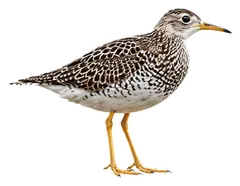 Upland SandpiperBartramia longicauda
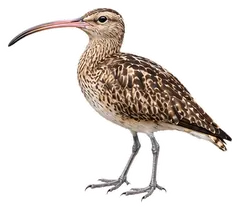 Bristle-thighed CurlewNumenius tahitiensis
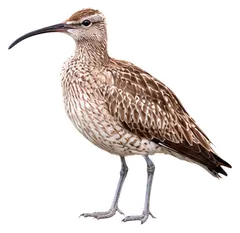 Eurasian WhimbrelNumenius phaeopus
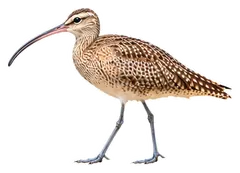 Hudsonian WhimbrelNumenius hudsonicus
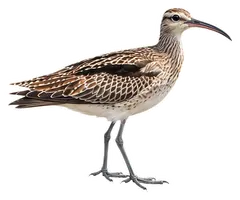 Little CurlewNumenius minutus
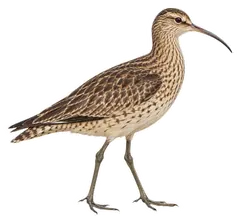 Eskimo CurlewNumenius borealis
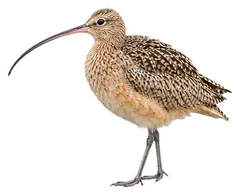 Long-billed CurlewNumenius americanus
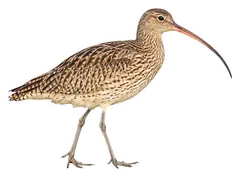 Far Eastern CurlewNumenius madagascariensis
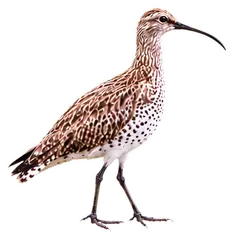 Slender-billed CurlewNumenius tenuirostris
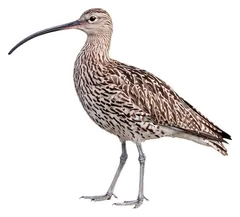 Eurasian CurlewNumenius arquata
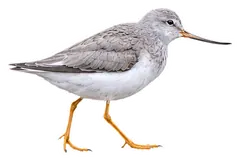
Download illustration
Free to use with credit: “Illustration: Bird Album (birdalbum.com)”. Drawn by AI from a reference photo by Birds of Gilgit-Baltistan. ↗

Heard it but can't see it? Mingji identifies birds by sound and photo, on your phone.