 Bird Album
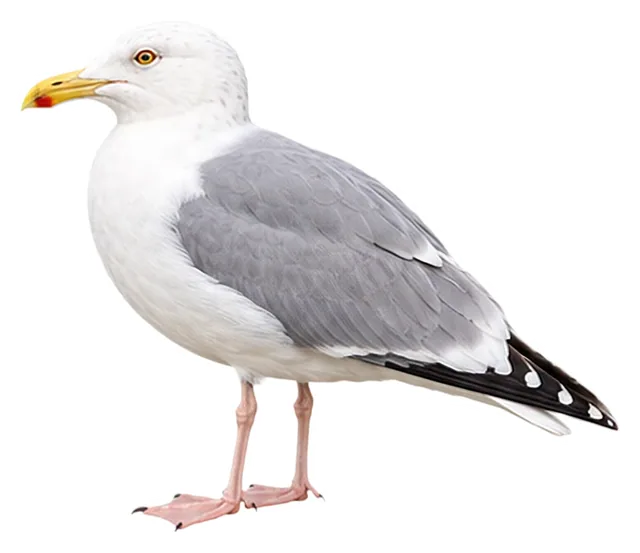
American Herring Gull
Larus smithsonianus Coues, 1862
60–66 cmLength1.1 kgWeight
Busiest months: May · Most records: United States, Canada, Mexico
Where and when it's recorded
Busiest months: May · Most records: United States, Canada, Mexico

American Herring Gull has been recorded at 823 of the 8,276 birding hotspots we track, in 37 countries and regions.
Records by month Northern Hemisphere
Where it's recorded most
- Parker River NWRUnited States32,145 records
- Montrose Point Bird Sanctuary, Lincoln Park, ChicagoUnited States28,442 records
- Edwin B. Forsythe NWRUnited States21,805 records
More places
- Hammonasset Beach SPUnited States20,556 records
- Point Pelee National ParkCanada16,691 records
- Central ParkUnited States16,400 records
- Tommy Thompson ParkCanada16,145 records
- Prospect ParkUnited States15,456 records
- Cape Island – South Cape May MeadowsUnited States15,329 records
- Cape Island – Cape May Point SPUnited States14,801 records
Countries and regions with the most records
eBird records via GBIF up to 2024-12-31. A record means someone listed it; more records partly mean more birders, not more birds.
About
The American herring gull (Larus smithsonianus or Larus argentatus smithsonianus), also known as the Arctic herring gull or Smithsonian gull, is a large gull that breeds in North America, where it is treated by the American Ornithological Society as distinct from the European herring gull (Larus argentatus).
Excerpt from Wikipedia, CC BY-SA 4.0 · authors · Read more on Wikipedia
Questions
How big is the American Herring Gull?
The American Herring Gull is about 60–66 cm long and weighs around 1.1 kg.
Where does the American Herring Gull live?
Its breeding range: North America: northern, western Alaska and northern Yukon across subarctic Canada to Baffin Island and Newfoundland, southern on eastern North Pacific coast to south-central British Columbia; east to Great Lakes, inland northeastern USA and western North Atlantic coast south to North Carolina. It is most often recorded in United States, Canada and Mexico.
When is the best time to see the American Herring Gull?
At the hotspots we track, it is recorded most in May (Northern Hemisphere).
Is the American Herring Gull endangered?
The IUCN Red List classifies the American Herring Gull as Least Concern.
What does the American Herring Gull eat?
Main food: Fish, shrimp & shellfish.
What family is the American Herring Gull in?
It belongs to the family Gulls, Terns, Skimmers (Laridae), order Charadriiformes.
At a glance
- Length
- 60–66 cm
- Weight
- 1.1 kg
- Habitat
- Coast & tidal flats
- Diet
- Fish, shrimp & shellfish
- Lifestyle
- Varied
- Migration
- Partial migrant
- Conservation
- Least Concern
More measurements
- Wing
- 430 mm
- Tail
- 166 mm
- Bill
- 69 mm
- Tarsus
- 64 mm
Averages from the AVONET dataset; length from field guides where available.
Range
North America: northern, western Alaska and northern Yukon across subarctic Canada to Baffin Island and Newfoundland, southern on eastern North Pacific coast to south-central British Columbia; east to Great Lakes, inland northeastern USA and western North Atlantic coast south to North Carolina
Breeding range, IOC World Bird List 15.2
Classification
- Order
- Charadriiformes
- Family
- Gulls, Terns, Skimmers Laridae
- Genus
- Larus
Other birds in the genus Larus
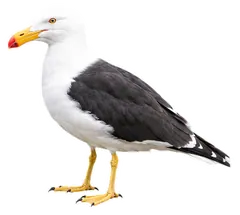 Pacific GullLarus pacificus
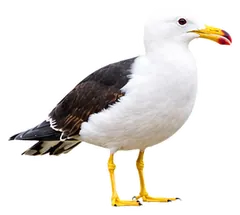 Belcher's GullLarus belcheri
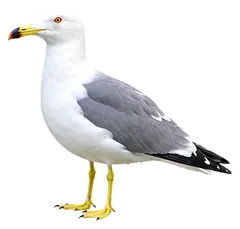 Black-tailed GullLarus crassirostris
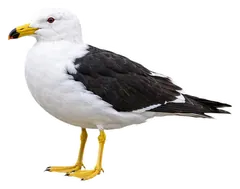 Olrog's GullLarus atlanticus
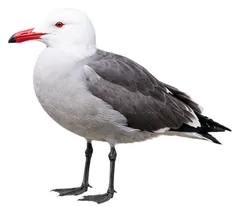 Heermann's GullLarus heermanni
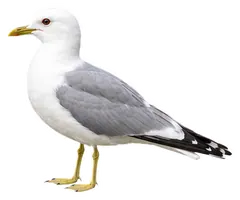 Common GullLarus canus
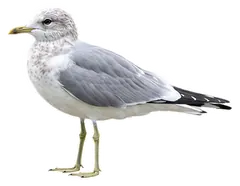 Short-billed GullLarus brachyrhynchus
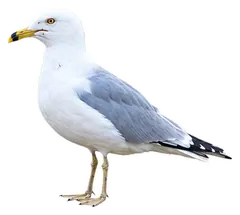 Ring-billed GullLarus delawarensis
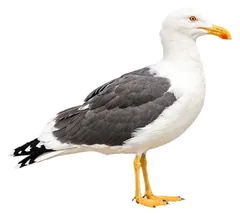 Yellow-footed GullLarus livens
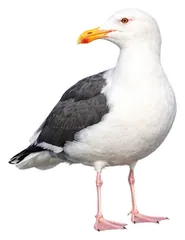 Western GullLarus occidentalis
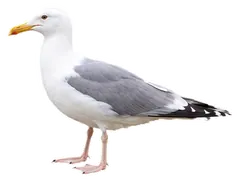 Caspian GullLarus cachinnans
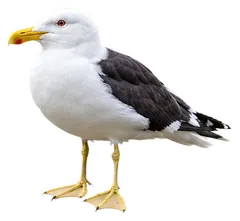 Kelp GullLarus dominicanus
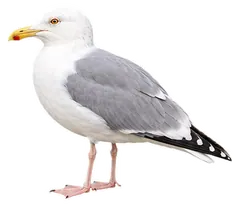
Download illustration
Free to use with credit: “Illustration: Bird Album (birdalbum.com)”. Drawn by AI from a reference photo by Guy Lemelin. ↗
Heard it but can't see it? Mingji identifies birds by sound and photo, on your phone.
In other languages
- EnglishAmerican Herring Gull
- 简体中文美洲银鸥
- 繁體中文美洲銀鷗
- 日本語アメリカセグロカモメ
- 한국어옅은재갈매기
- DeutschKanadamöwe
- FrançaisGoéland hudsonien
- EspañolGaviota argéntea americana
- Portuguêsgaivota-prateada-americana
- ItalianoGabbiano reale americano
- NederlandsAmerikaanse Zilvermeeuw
- РусскийАмериканская чайка
- Svenskakanadatrut
- DanskAmerikansk Sølvmåge
- Polskimewa popielata