 Bird Album
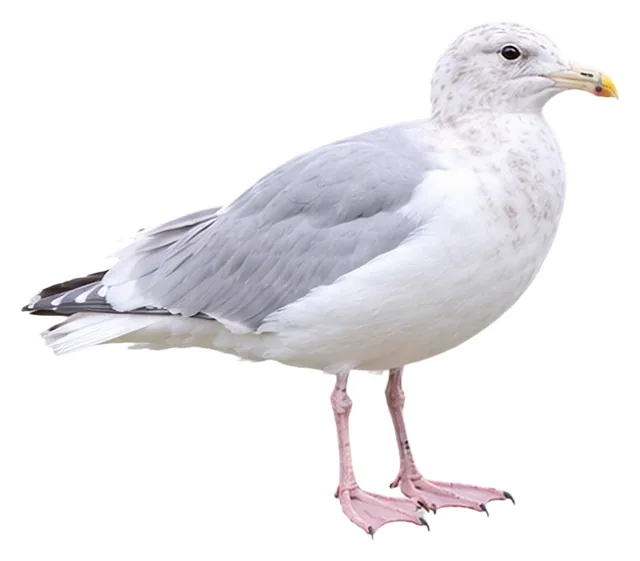
Glaucous-winged Gull
Larus glaucescens Naumann, JF, 1840
50–68 cmLength139 cmWingspan1.1 kgWeight
The adult’s gray wingtips usually match the upper back in shade.
Busiest months: September–January · Most records: Canada, United States, Japan
How to identify
Field marks
- Adult wingtips gray, usually matching upper back in shade
- Breeding adult has white head, neck, breast, belly and tail
- Adult has pink legs and a yellow bill with a red patch near the tip
- Adult back and wings silver-gray
Male, female and young
Juvenile brown or gray with a black bill; does not acquire adult plumage until 4 years old.
Voice
Calls include a low “kak-kak-kak” or “wow”, as well as higher-pitched wailing.
Where and when it's recorded
Busiest months: September–January · Most records: Canada, United States, Japan

Glaucous-winged Gull has been recorded at 211 of the 8,276 birding hotspots we track, in 10 countries and regions.
Records by month Northern Hemisphere
Where it's recorded most
- Reifel Bird SanctuaryCanada12,624 records
- Billy Frank Jr. Nisqually NWRUnited States11,734 records
- North Vancouver – Maplewood Flats Conservation AreaCanada11,314 records
More places
- Union Bay Natural Area/Montlake FillUnited States10,165 records
- Pt. Pinos – seawatch onlyUnited States8,690 records
- Southeast Farallon IslandUnited States8,417 records
- Clover PointCanada8,328 records
- St. Paul IslandUnited States8,016 records
- Discovery ParkUnited States7,652 records
- Iona IslandCanada7,492 records
Countries and regions with the most records
eBird records via GBIF up to 2024-12-31. A record means someone listed it; more records partly mean more birders, not more birds.
About
The glaucous-winged gull (Larus glaucescens) is a large, white-headed gull. The genus name is from Latin Larus which appears to have referred to a gull or other large seabird. The specific glaucescens is Neo-Latin for "glaucous" from the Ancient Greek, glaukos, denoting the grey color of its wings.
Excerpt from Wikipedia, CC BY-SA 4.0 · authors · Read more on Wikipedia
Questions
How big is the Glaucous-winged Gull?
The Glaucous-winged Gull is about 50–68 cm long, with a wingspan of 139 cm and weighs around 1.1 kg.
Where does the Glaucous-winged Gull live?
Its breeding range: Palearctic, North America: coastal North Pacific in eastern Siberia, Kamchatka, Kuril and Commander islands (eastern Russia); Aleutian and Pribilof islands, southwestern Alaska mainland to northern Washington. It is most often recorded in Canada, United States and Japan.
When is the best time to see the Glaucous-winged Gull?
At the hotspots we track, it is recorded most in January, September, October, November and December (Northern Hemisphere).
Is the Glaucous-winged Gull endangered?
The IUCN Red List classifies the Glaucous-winged Gull as Least Concern.
What does the Glaucous-winged Gull eat?
Main food: Fish, shrimp & shellfish.
What family is the Glaucous-winged Gull in?
It belongs to the family Gulls, Terns, Skimmers (Laridae), order Charadriiformes.
At a glance
- Length
- 50–68 cm
- Wingspan
- 139 cm
- Weight
- 1.1 kg
- Habitat
- Coast & tidal flats
- Diet
- Fish, shrimp & shellfish
- Lifestyle
- Varied
- Migration
- Migratory
- Conservation
- Least Concern
More measurements
- Wing
- 412 mm
- Tail
- 166 mm
- Bill
- 70 mm
- Tarsus
- 65 mm
Averages from the AVONET dataset; length from field guides where available.
Range
Palearctic, North America: coastal North Pacific in eastern Siberia, Kamchatka, Kuril and Commander islands (eastern Russia); Aleutian and Pribilof islands, southwestern Alaska mainland to northern Washington
Breeding range, IOC World Bird List 15.2
Classification
- Order
- Charadriiformes
- Family
- Gulls, Terns, Skimmers Laridae
- Genus
- Larus
Other birds in the genus Larus
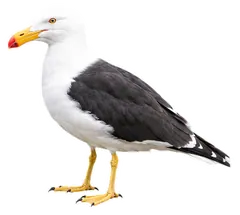 Pacific GullLarus pacificus
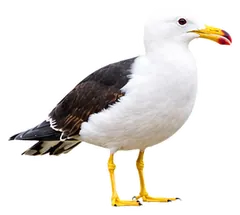 Belcher's GullLarus belcheri
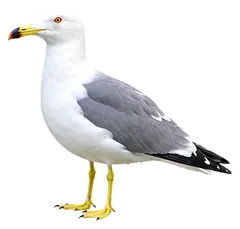 Black-tailed GullLarus crassirostris
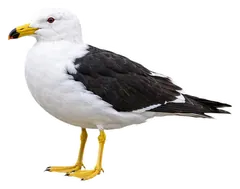 Olrog's GullLarus atlanticus
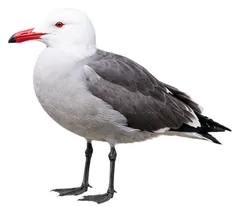 Heermann's GullLarus heermanni
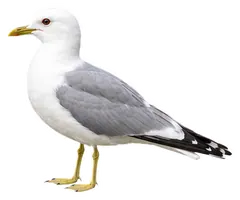 Common GullLarus canus
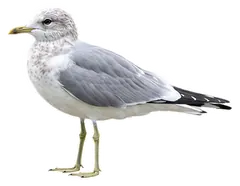 Short-billed GullLarus brachyrhynchus
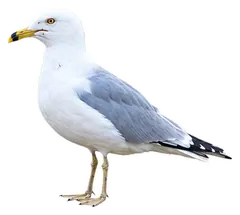 Ring-billed GullLarus delawarensis
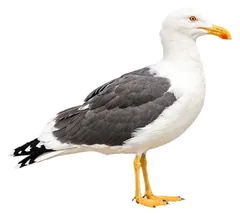 Yellow-footed GullLarus livens
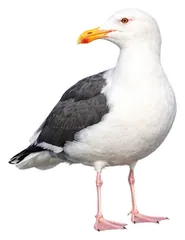 Western GullLarus occidentalis
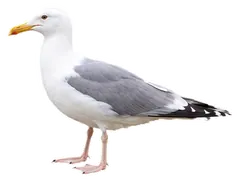 Caspian GullLarus cachinnans
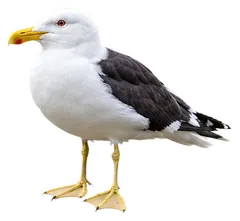 Kelp GullLarus dominicanus
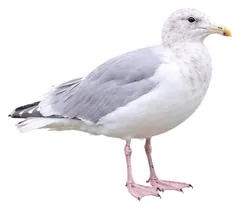
Download illustration
Free to use with credit: “Illustration: Bird Album (birdalbum.com)”. Drawn by AI from a reference photo by irishou. ↗
Heard it but can't see it? Mingji identifies birds by sound and photo, on your phone.