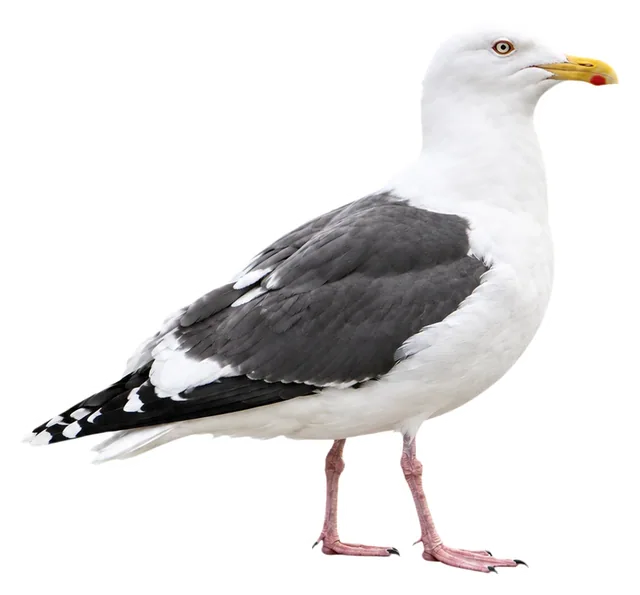
Slaty-backed Gull
Larus schistisagus Stejneger, 1884
55–68 cmLength141 cmWingspan1.3 kgWeight
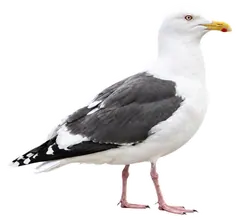
The adult has a dark gray back, white belly and wing patches like a string of pearls.
Busiest months: February and September · Most records: United States, Japan, South Korea
How to identify
Field marks
- Adult back and wings dark slate-gray with broad white wing edges
- Adult has a string of white patches on the middle primaries
- Legs pink and rather short
- Adult bill yellow with an orange-red patch near the end
Male, female and young
Immature plumage is rufous.
Where and when it's recorded
Busiest months: February and September · Most records: United States, Japan, South Korea

Slaty-backed Gull has been recorded at 176 of the 8,276 birding hotspots we track, in 12 countries and regions.
Records by month Northern Hemisphere
Where it's recorded most
- St. Paul IslandUnited States2,309 records
- GambellUnited States1,463 records
- Rausu – Rausu Fishing PortJapan532 records
More places
- Edogawa Ward – Kasai Rinkai Park / Kasai Kaihin ParkJapan467 records
- Nemuro – Cape NosappuJapan430 records
- Funabashi – Funabashi Sanbanze Seaside ParkJapan375 records
- Choshi – Choshi PortJapan230 records
- Muskegon Wastewater SystemUnited States210 records
- Wendy Park, Whiskey IslandUnited States209 records
- St. John's – Quidi Vidi LakeCanada192 records
Countries and regions with the most records
eBird records via GBIF up to 2024-12-31. A record means someone listed it; more records partly mean more birders, not more birds.
About
The slaty-backed gull (Larus schistisagus) is a large, white-headed gull that breeds on the north-eastern coast of the Palearctic, but travels widely during nonbreeding seasons. It is similar in appearance to the western gull and the glaucous-winged gull. Another alternate name is Pacific gull, though it also applies to a Southern Hemisphere species, L. pacificus.
Excerpt from Wikipedia, CC BY-SA 4.0 · authors · Read more on Wikipedia
Questions
How big is the Slaty-backed Gull?
The Slaty-backed Gull is about 55–68 cm long, with a wingspan of 141 cm and weighs around 1.3 kg.
Where does the Slaty-backed Gull live?
Its breeding range: Palearctic: coasts and lakes of northeastern Siberia south of Anadyr, Kamchatka, Sea of Okhotsk, Sakhalin, Kuril Islands (eastern Russia), northeastern China, and Hokkaido and northern Honshu (northern Japan). It is most often recorded in United States, Japan and South Korea.
When is the best time to see the Slaty-backed Gull?
At the hotspots we track, it is recorded most in February and September (Northern Hemisphere).
Is the Slaty-backed Gull endangered?
The IUCN Red List classifies the Slaty-backed Gull as Least Concern.
What does the Slaty-backed Gull eat?
Main food: Omnivore.
What family is the Slaty-backed Gull in?
It belongs to the family Gulls, Terns, Skimmers (Laridae), order Charadriiformes.
At a glance
- Length
- 55–68 cm
- Wingspan
- 141 cm
- Weight
- 1.3 kg
- Habitat
- Coast & tidal flats
- Diet
- Omnivore
- Lifestyle
- Varied
- Migration
- Partial migrant
- Conservation
- Least Concern
More measurements
- Wing
- 435 mm
- Tail
- 172 mm
- Bill
- 68 mm
- Tarsus
- 68 mm
Averages from the AVONET dataset; length from field guides where available.
Range
Palearctic: coasts and lakes of northeastern Siberia south of Anadyr, Kamchatka, Sea of Okhotsk, Sakhalin, Kuril Islands (eastern Russia), northeastern China, and Hokkaido and northern Honshu (northern Japan)
Breeding range, IOC World Bird List 15.2
Classification
- Order
- Charadriiformes
- Family
- Gulls, Terns, Skimmers Laridae
- Genus
- Larus
Other birds in the genus Larus
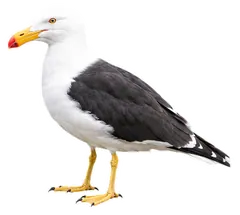 Pacific GullLarus pacificus
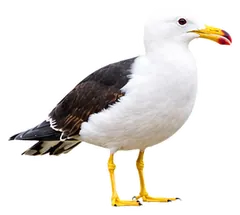 Belcher's GullLarus belcheri
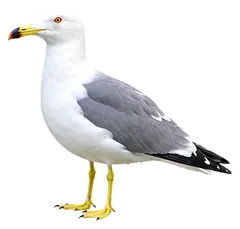 Black-tailed GullLarus crassirostris
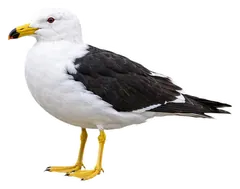 Olrog's GullLarus atlanticus
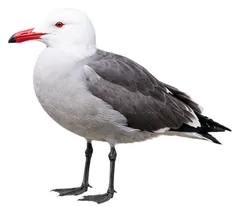 Heermann's GullLarus heermanni
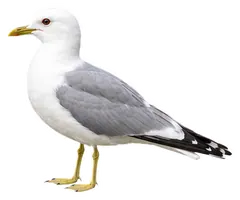 Common GullLarus canus
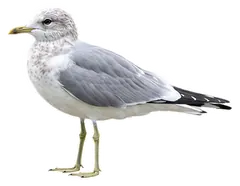 Short-billed GullLarus brachyrhynchus
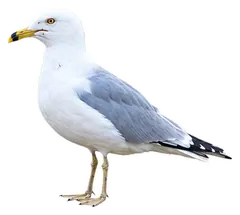 Ring-billed GullLarus delawarensis
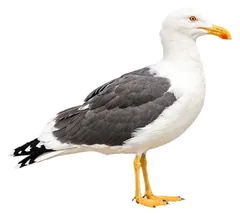 Yellow-footed GullLarus livens
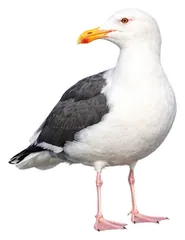 Western GullLarus occidentalis
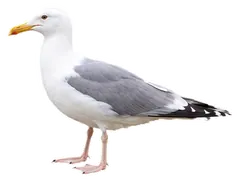 Caspian GullLarus cachinnans
 Kelp GullLarus dominicanus
Download illustration
Free to use with credit: “Illustration: Bird Album (birdalbum.com)”. Drawn by AI from a reference photo by Looby Loo Loo. ↗
Heard it but can't see it? Mingji identifies birds by sound and photo, on your phone.