 Bird Album
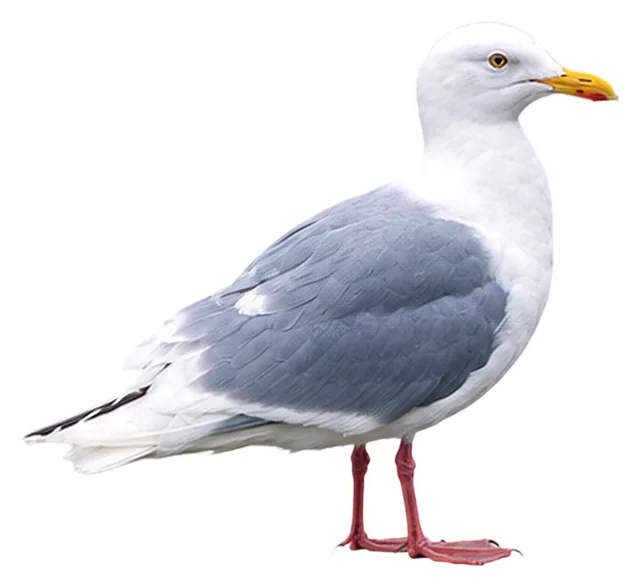
Glaucous Gull
Larus hyperboreus Gunnerus, 1767
55–77 cmLength158 cmWingspan1.5 kgWeight
It is a large, pale gull with no black in the wings or tail.
Busiest months: January and April–May · Most records: United States, Canada, Iceland
How to identify
Field marks
- No black in wings or tail
- Adult back pale gray
- Adult bill stout and yellow
Male, female and young
Juvenile plumage very pale; bill pink with black.
Voice
Calls resemble low “laughter”.
Where and when it's recorded

Glaucous Gull has been recorded at 711 of the 8,171 birding hotspots we track, in 40 countries and regions.
Records by month Northern Hemisphere
Where it's recorded most
- GambellUnited States6,236 records
- Húsavík – hafnarsvæðiIceland4,552 records
- St. Paul IslandUnited States3,627 records
More places
- Pointe-au-PèreCanada2,185 records
- Quai, Pointe-au-PèreCanada2,105 records
- Manitowoc LakefrontUnited States1,893 records
- St. John's – Quidi Vidi LakeCanada1,878 records
- Les EscouminsCanada1,656 records
- BakkatjörnIceland936 records
- Wendy Park, Whiskey IslandUnited States888 records
Countries and regions with the most records
eBird records via GBIF up to 2024-12-31. A record means someone listed it; more records partly mean more birders, not more birds.
About
The glaucous gull (Larus hyperboreus) is a large gull, the second-largest gull in the world. The genus name is from Latin larus, which appears to have referred to a gull or other large seabird. An older English name for this species is burgomaster.
Excerpt from Wikipedia, CC BY-SA 4.0 · authors · Read more on Wikipedia
Questions
How big is the Glaucous Gull?
The Glaucous Gull is about 55–77 cm long, with a wingspan of 158 cm and weighs around 1.5 kg.
Where does the Glaucous Gull live?
Its breeding range: Palearctic, North America: circumpolar Arctic coasts. It is most often recorded in United States, Canada and Iceland.
When is the best time to see the Glaucous Gull?
At the hotspots we track, it is recorded most in January, April and May (Northern Hemisphere).
Is the Glaucous Gull endangered?
The IUCN Red List classifies the Glaucous Gull as Least Concern.
What does the Glaucous Gull eat?
Main food: Omnivore.
What family is the Glaucous Gull in?
It belongs to the family Gulls, Terns, Skimmers (Laridae), order Charadriiformes.
At a glance
- Length
- 55–77 cm
- Wingspan
- 158 cm
- Weight
- 1.5 kg
- Habitat
- Coast & tidal flats
- Diet
- Omnivore
- Lifestyle
- Varied
- Migration
- Migratory
- Conservation
- Least Concern
More measurements
- Wing
- 463 mm
- Tail
- 188 mm
- Bill
- 76 mm
- Tarsus
- 71 mm
Averages from the AVONET dataset; length from field guides where available.
Range
Palearctic, North America: circumpolar Arctic coasts
Breeding range, IOC World Bird List 15.2
Classification
- Order
- Charadriiformes
- Family
- Gulls, Terns, Skimmers Laridae
- Genus
- Larus
Other birds in the genus Larus
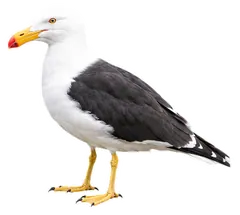 Pacific GullLarus pacificus
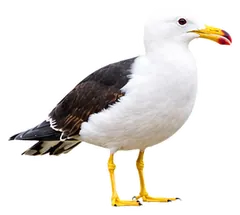 Belcher's GullLarus belcheri
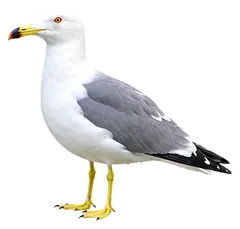 Black-tailed GullLarus crassirostris
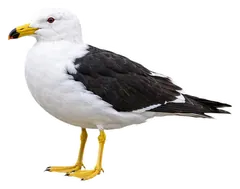 Olrog's GullLarus atlanticus
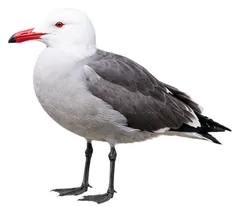 Heermann's GullLarus heermanni
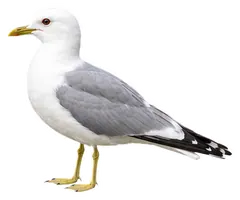 Common GullLarus canus
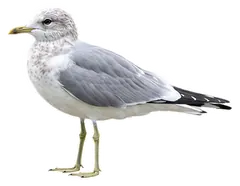 Short-billed GullLarus brachyrhynchus
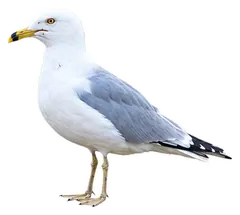 Ring-billed GullLarus delawarensis
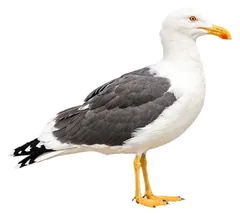 Yellow-footed GullLarus livens
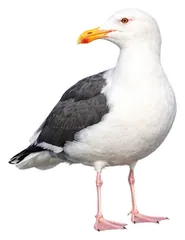 Western GullLarus occidentalis
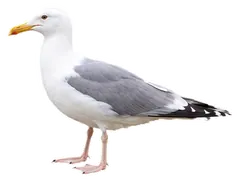 Caspian GullLarus cachinnans
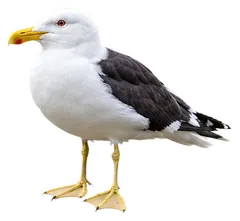 Kelp GullLarus dominicanus
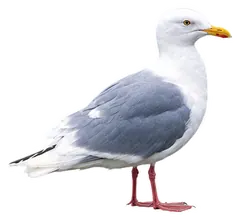
Download illustration
Free to use with credit: “Illustration: Bird Album (birdalbum.com)”. Drawn by AI from a reference photo by Sowls, Art. ↗

Heard it but can't see it? Mingji identifies birds by sound and photo, on your phone.