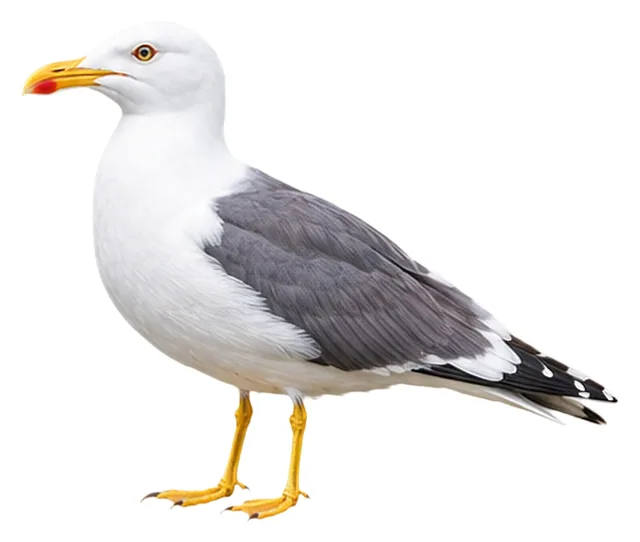
Lesser Black-backed Gull
Larus fuscus Linnaeus, 1758
≈59 cmLength134 cmWingspan762 gWeight
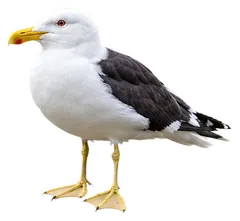
It is a large gull with black or dark gray back and wings, a yellow bill with a red spot, and yellow legs.
Busiest months: April and September–October · Most records: United Kingdom, United States, Spain
How to identify
Field marks
- Adult back and wings black or dark gray
- Bill yellow with a red spot
- Legs yellow
- Head grayish in winter
Male, female and young
Male slightly larger than female on average; juvenile has scaly blackish-brown upperparts and matures in four years.
Voice
“Laughing” calls resembling those of European Herring Gull but distinctly lower in pitch.
Where and when it's recorded
Busiest months: April and September–October · Most records: United Kingdom, United States, Spain

Lesser Black-backed Gull has been recorded at 2,153 of the 8,276 birding hotspots we track, in 150 countries and regions.
Records by month Northern Hemisphere
Where it's recorded most
- Amwell HMWT NRUnited Kingdom7,509 records
- Peace Valley ParkUnited States5,290 records
- Cape Island – CMP – Coral Ave. dune crossingUnited States5,114 records
More places
- Cape Island – South Cape May MeadowsUnited States5,037 records
- Minsmere RSPB ReserveUnited Kingdom4,240 records
- Beddington FarmlandsUnited Kingdom4,226 records
- Titchwell Marsh RSPB ReserveUnited Kingdom3,767 records
- Spruce Run Recreation AreaUnited States3,761 records
- Desembocadura del Guadalhorce – ÁreaSpain3,693 records
- Lezíria Grande de Vila Franca de Xira – área geralPortugal3,400 records
Countries and regions with the most records
eBird records via GBIF up to 2024-12-31. A record means someone listed it; more records partly mean more birders, not more birds.
About
The lesser black-backed gull (Larus fuscus) is a large gull that breeds on the Atlantic and Arctic coasts of Europe. It is migratory, wintering from the British Isles south to West Africa. However, it has increased dramatically in North America, especially along the east coast.
Excerpt from Wikipedia, CC BY-SA 4.0 · authors · Read more on Wikipedia
Questions
How big is the Lesser Black-backed Gull?
The Lesser Black-backed Gull is about ≈59 cm long, with a wingspan of 134 cm and weighs around 762 g.
Where does the Lesser Black-backed Gull live?
Its breeding range: Palearctic: Greenland, Iceland, western Europe to north-central Siberia. It is most often recorded in United Kingdom, United States and Spain.
When is the best time to see the Lesser Black-backed Gull?
At the hotspots we track, it is recorded most in April, September and October (Northern Hemisphere).
Is the Lesser Black-backed Gull endangered?
The IUCN Red List classifies the Lesser Black-backed Gull as Least Concern.
What does the Lesser Black-backed Gull eat?
Main food: Fish, shrimp & shellfish.
What family is the Lesser Black-backed Gull in?
It belongs to the family Gulls, Terns, Skimmers (Laridae), order Charadriiformes.
At a glance
- Length
- ≈59 cm
- Wingspan
- 134 cm
- Weight
- 762 g
- Habitat
- Coast & tidal flats
- Diet
- Fish, shrimp & shellfish
- Lifestyle
- Varied
- Migration
- Partial migrant
- Conservation
- Least Concern
More measurements
- Wing
- 412 mm
- Tail
- 147 mm
- Bill
- 62 mm
- Tarsus
- 62 mm
Averages from the AVONET dataset; length from field guides where available.
Range
Palearctic: Greenland, Iceland, western Europe to north-central Siberia
Breeding range, IOC World Bird List 15.2
Classification
- Order
- Charadriiformes
- Family
- Gulls, Terns, Skimmers Laridae
- Genus
- Larus
Other birds in the genus Larus
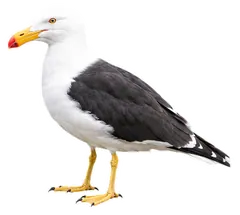 Pacific GullLarus pacificus
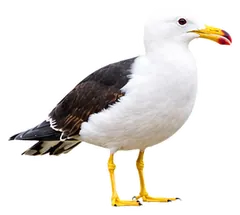 Belcher's GullLarus belcheri
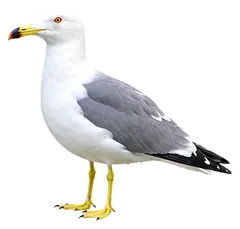 Black-tailed GullLarus crassirostris
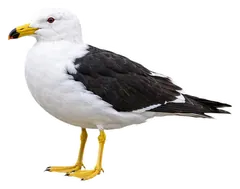 Olrog's GullLarus atlanticus
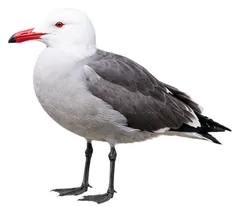 Heermann's GullLarus heermanni
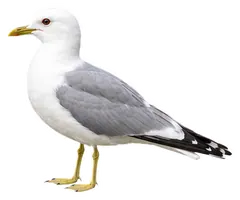 Common GullLarus canus
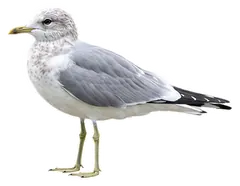 Short-billed GullLarus brachyrhynchus
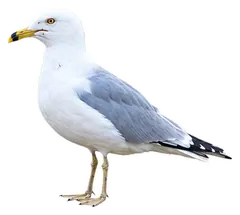 Ring-billed GullLarus delawarensis
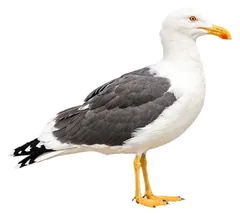 Yellow-footed GullLarus livens
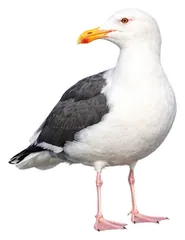 Western GullLarus occidentalis
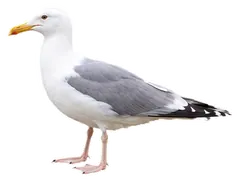 Caspian GullLarus cachinnans
 Kelp GullLarus dominicanus
Download illustration
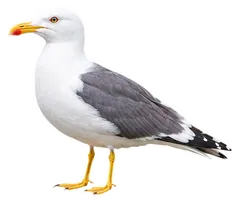
Free to use with credit: “Illustration: Bird Album (birdalbum.com)”. Drawn by AI from a reference photo by Andreas Trepte. ↗

Heard it but can't see it? Mingji identifies birds by sound and photo, on your phone.