 Bird Album
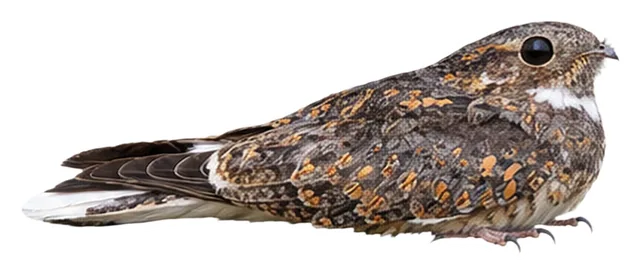
Savanna Nightjar
Caprimulgus affinis Horsfield, 1821
20–27 cmLength64 cmWingspan59 gWeight
This mottled gray-brown nightjar has almost entirely white outer tail feathers in the male.
Busiest months: February · Most records: China, India, Singapore
Looks like Grey Nightjar, Large-tailed Nightjar
How to identify
Field marks
- Male's outermost two tail feathers almost entirely white
- Gray-brown overall, with fine white spots and vermiculations
- Male has an oval white patch on each side of the throat
- Reddish-brown bill with a black tip
Male, female and young
The male has white patches on the throat and outer tail feathers; the female has a dull throat patch and entirely brown tail feathers; juveniles resemble the female.
Voice
At night, the male gives a high-pitched, sharp, rising call, repeated many times.
Similar species
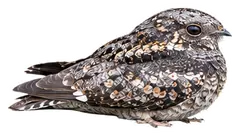
The male Savanna Nightjar has almost entirely white outer tail feathers; other nightjars, including Grey Nightjar, have only partly white tail feathers.
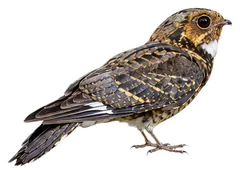
The male Savanna Nightjar has almost entirely white outer tail feathers; other nightjars, including Large-tailed Nightjar, have only partly white tail feathers.
Where and when it's recorded

Savanna Nightjar has been recorded at 325 of the 8,171 birding hotspots we track, in 13 countries and regions.
Records by month Northern Hemisphere
Where it's recorded most
- Nantou – Puli Tzuchi FoundationTaiwan (China)489 records
- IISER Tirupati – Mangalam CampusIndia413 records
- Kerala Agricultural UniversityIndia407 records
More places
- Pingtung – Pingtung University of Science and TechnologyTaiwan (China)367 records
- TmatboeyCambodia331 records
- Chiayi – NCYU Lantan CampusTaiwan (China)243 records
- College of Veterinary and Animal Sciences, PookodeIndia236 records
- Lorong Halus WetlandSingapore227 records
- Kerala Agricultural University – Krishi Vignyan KendraIndia207 records
- Nantou – Jiji Endemic Species Research InstituteTaiwan (China)205 records
Countries and regions with the most records
eBird records via GBIF up to 2024-12-31. A record means someone listed it; more records partly mean more birders, not more birds.
About
The savanna nightjar (Caprimulgus affinis), also known as allied nightjar or Franklin's nightjar, is a species of nightjar found in South and Southeast Asia. The IUCN Red List has assessed the species to be of least concern because it has a large range and its population trend is stable. As other nightjars, this nocturnal bird is characterised by its large eyes, gaping mouth and excellent camouflage.
Excerpt from Wikipedia, CC BY-SA 4.0 · authors · Read more on Wikipedia
Questions
How big is the Savanna Nightjar?
The Savanna Nightjar is about 20–27 cm long, with a wingspan of 64 cm and weighs around 59 g.
Where does the Savanna Nightjar live?
Its breeding range: Oriental, Australasia: widespread. It is most often recorded in China, India and Singapore.
When is the best time to see the Savanna Nightjar?
At the hotspots we track, it is recorded most in February (Northern Hemisphere).
Is the Savanna Nightjar endangered?
The IUCN Red List classifies the Savanna Nightjar as Least Concern.
What does the Savanna Nightjar eat?
Main food: Insects & other invertebrates.
What family is the Savanna Nightjar in?
It belongs to the family Nightjars (Caprimulgidae), order Caprimulgiformes.
At a glance
- Length
- 20–27 cm
- Wingspan
- 64 cm
- Weight
- 59 g
- Habitat
- Grassland
- Diet
- Insects & other invertebrates
- Lifestyle
- Feeds in the air
- Migration
- Partial migrant
- Conservation
- Least Concern
More measurements
- Wing
- 160 mm
- Tail
- 94 mm
- Bill
- 21 mm
- Tarsus
- 18 mm
Averages from the AVONET dataset; length from field guides where available.
Range
Oriental, Australasia: widespread
Breeding range, IOC World Bird List 15.2
Subspecies · 2
- Caprimulgus affinis amoyensis s, se China and n Vietnam
- Caprimulgus affinis stictomus Taiwan (China)
Classification
- Order
- Caprimulgiformes
- Family
- Nightjars Caprimulgidae
- Genus
- Caprimulgus
Other birds in the genus Caprimulgus
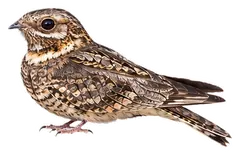 Red-necked NightjarCaprimulgus ruficollis
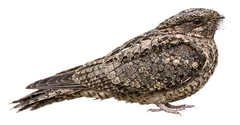 Jungle NightjarCaprimulgus indicusGrey NightjarCaprimulgus jotaka
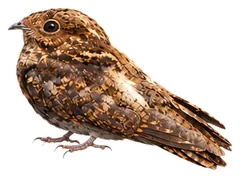 Palau NightjarCaprimulgus phalaena
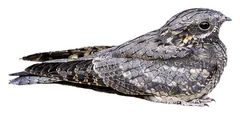 European NightjarCaprimulgus europaeus
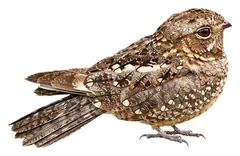 Sombre NightjarCaprimulgus fraenatus
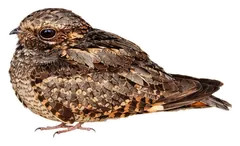 Rufous-cheeked NightjarCaprimulgus rufigena
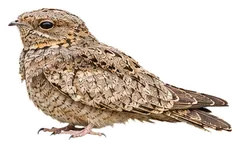 Egyptian NightjarCaprimulgus aegyptius
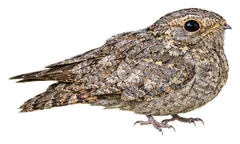 Sykes's NightjarCaprimulgus mahrattensis
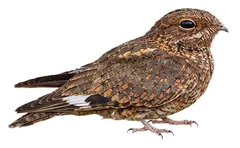 Nubian NightjarCaprimulgus nubicus
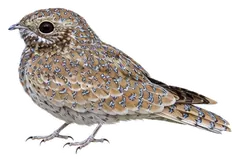 Golden NightjarCaprimulgus eximius
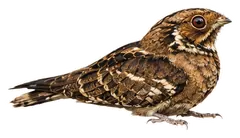 Jerdon's NightjarCaprimulgus atripennis
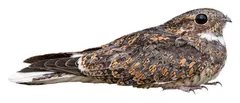
Download illustration
Free to use with credit: “Illustration: Bird Album (birdalbum.com)”. Drawn by AI from a reference photo by Tommy Hui. ↗
Heard it but can't see it? Mingji identifies birds by sound and photo, on your phone.
In other languages
- EnglishSavanna Nightjar
- 简体中文林夜鹰
- 繁體中文南亞夜鷹
- 日本語シロアゴヨタカ
- DeutschSavannennachtschwalbe
- FrançaisEngoulevent affin
- EspañolChotacabras de sabana
- Portuguêsnoitibó-da-savana
- ItalianoSucciacapre di savana
- NederlandsSavannenachtzwaluw
- РусскийСаванный козодой
- Svenskasavannattskärra
- DanskSavannenatravn
- Polskilelek krótkosterny