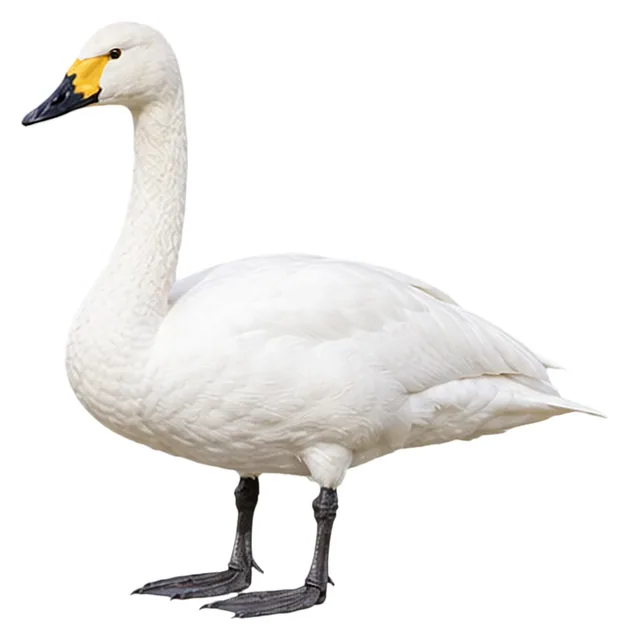
Tundra Swan
Cygnus columbianus (Ord, 1815)
115–150 cmLength198 cmWingspan6.4 kgWeight
It is a size smaller than Whooper Swan, with a black bill and a smaller yellow area at its base.
Busiest months: November–January · Most records: United States, Canada, United Kingdom
Looks like Whooper Swan
How to identify
Field marks
- White overall, legs and feet black
- Bill black with a small yellow area at the base
- Yellow on the side of the upper mandible does not form a forward-pointing tip
- Shorter neck and rounder head than Whooper Swan
Male, female and young
Female slightly smaller than male, with no other differences in appearance; immature has gray on the head and neck, and a large dirty-pink area at the base of the bill.
Voice
High-pitched goose-like calls, like geese of the genus Branta; the Eurasian subspecies gives a low, soft “bow-wow” in flight.
Similar species
Where and when it's recorded
Busiest months: November–January · Most records: United States, Canada, United Kingdom

Tundra Swan has been recorded at 1,163 of the 8,276 birding hotspots we track, in 51 countries and regions.
Records by month Northern Hemisphere
Where it's recorded most
- Bombay Hook National Wildlife RefugeUnited States6,551 records
- Middle Creek WMA (IBA)United States5,272 records
- Ridgefield NWR – River 'S' UnitUnited States4,818 records
More places
- Blackwater NWR – Wildlife DriveUnited States4,105 records
- Edwin B. Forsythe NWRUnited States3,077 records
- Fernhill WetlandsUnited States2,868 records
- Pea Island NWR – North Pond Wildlife TrailUnited States2,508 records
- Chincoteague NWRUnited States2,498 records
- Farmington Bay WMAUnited States2,490 records
- Cape Island – Cape May Point SPUnited States2,297 records
Countries and regions with the most records
eBird records via GBIF up to 2024-12-31. A record means someone listed it; more records partly mean more birders, not more birds.
About
The tundra swan (Cygnus columbianus) is a species of swan which breeds in the arctic, and overwinters in North America, Europe, and Asia. It is the smallest of the Holarctic swans, at 115–150 cm (45–59 in) in length, 168–211 cm (66–83 in) in wingspan and 3.4–9.6 kg (7.5–21.2 lb) in weight. Typically, the plumage of adults is entirely white, with solid black feet, a black beak that has varying amounts of yellow, and a thin streak of pink along the mouthline, although colour variation is common.
Excerpt from Wikipedia, CC BY-SA 4.0 · authors · Read more on Wikipedia
Questions
How big is the Tundra Swan?
The Tundra Swan is about 115–150 cm long, with a wingspan of 198 cm and weighs around 6.4 kg.
Where does the Tundra Swan live?
Its breeding range: Palearctic, North America: northern. It is most often recorded in United States, Canada and United Kingdom.
When is the best time to see the Tundra Swan?
At the hotspots we track, it is recorded most in January, November and December (Northern Hemisphere).
Is the Tundra Swan endangered?
The IUCN Red List classifies the Tundra Swan as Least Concern.
What does the Tundra Swan eat?
Main food: Aquatic plants.
What family is the Tundra Swan in?
It belongs to the family Ducks, Geese, Swans (Anatidae), order Anseriformes.
At a glance
- Length
- 115–150 cm
- Wingspan
- 198 cm
- Weight
- 6.4 kg
- Habitat
- Wetland
- Diet
- Aquatic plants
- Lifestyle
- On the water surface
- Migration
- Migratory
- Conservation
- Least Concern
More measurements
- Wing
- 538 mm
- Tail
- 162 mm
- Bill
- 102 mm
- Tarsus
- 94 mm
Averages from the AVONET dataset; length from field guides where available.
Range
Palearctic, North America: northern
Breeding range, IOC World Bird List 15.2
Classification
- Order
- Anseriformes
- Family
- Ducks, Geese, Swans Anatidae
- Genus
- Cygnus
Other birds in the genus Cygnus
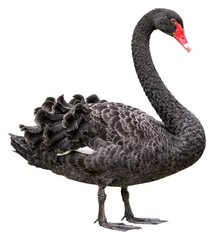 Black SwanCygnus atratus
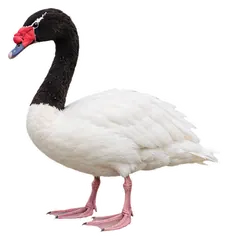 Black-necked SwanCygnus melancoryphus
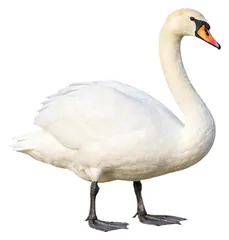 Mute SwanCygnus olor
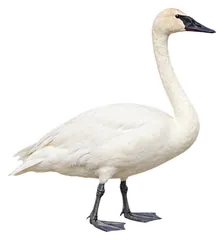 Trumpeter SwanCygnus buccinator
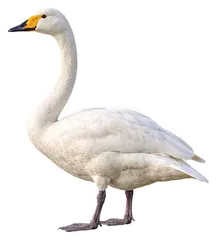 Whooper SwanCygnus cygnus
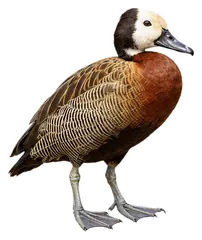 White-faced Whistling DuckDendrocygna viduata
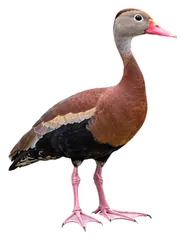 Black-bellied Whistling DuckDendrocygna autumnalis
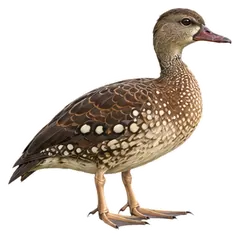 Spotted Whistling DuckDendrocygna guttata
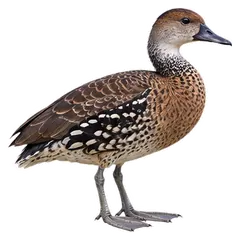 West Indian Whistling DuckDendrocygna arborea
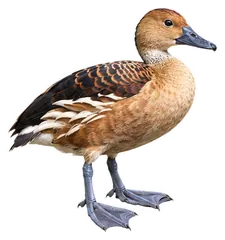 Fulvous Whistling DuckDendrocygna bicolor
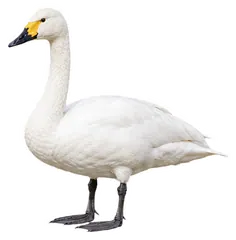
Download illustration
Free to use with credit: “Illustration: Bird Album (birdalbum.com)”. Drawn by AI from a reference photo by Maga-chan. ↗

Heard it but can't see it? Mingji identifies birds by sound and photo, on your phone.