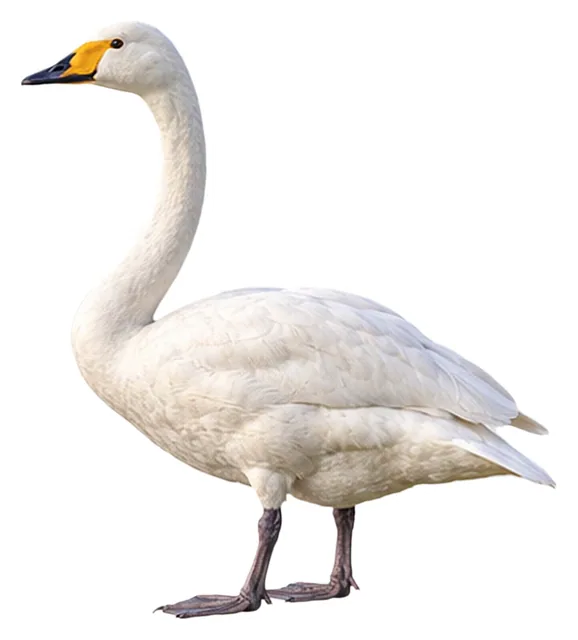
Whooper Swan
Cygnus cygnus (Linnaeus, 1758)
140–165 cmLength229 cmWingspan9.3 kgWeight
It is pure white overall with an extremely long neck, and a large yellow area at the base of the bill that ends in a forward point.
Busiest months: January, March–May and October–November · Most records: United Kingdom, Iceland, Finland
Looks like Tundra Swan, Mute Swan
How to identify
Field marks
- Large yellow area at the base of the bill ends in a forward point; bill tip black
- Pure white overall, with an extremely long neck
- Legs and feet black
- Head more angular than in Tundra Swan
Male, female and young
Sexes identical in shape and color; juvenile under a year old pale gray to gray-brown, with pink replacing the yellow on the bill.
Voice
Low, goose-like calls, often in groups of three or four, such as “kloo-kloo-kloo”.
Similar species
Where and when it's recorded
Busiest months: January, March–May and October–November · Most records: United Kingdom, Iceland, Finland

Whooper Swan has been recorded at 951 of the 8,276 birding hotspots we track, in 53 countries and regions.
Records by month Northern Hemisphere
Where it's recorded most
- KaldbakstjarnirIceland3,662 records
- WWT Welney Wetland CentreUnited Kingdom2,584 records
- Reykjavík – Tjörnin pondIceland2,410 records
More places
- Frampton Marsh RSPB ReserveUnited Kingdom1,314 records
- BakkatjörnIceland1,216 records
- Espoo – Laajalahti MaariFinland1,010 records
- WWT Martin Mere Wetland CentreUnited Kingdom974 records
- Ekeby våtmarkSweden598 records
- Minsmere RSPB ReserveUnited Kingdom562 records
- Spurn Bird Observatory Recording AreaUnited Kingdom537 records
Countries and regions with the most records
eBird records via GBIF up to 2024-12-31. A record means someone listed it; more records partly mean more birders, not more birds.
About
The whooper swan, is a large northern hemisphere swan. It is the Eurasian counterpart of the North American trumpeter swan.
Excerpt from Wikipedia, CC BY-SA 4.0 · authors · Read more on Wikipedia
Questions
How big is the Whooper Swan?
The Whooper Swan is about 140–165 cm long, with a wingspan of 229 cm and weighs around 9.3 kg.
Where does the Whooper Swan live?
Its breeding range: Palearctic: northern Eurasia. It is most often recorded in United Kingdom, Iceland and Finland.
When is the best time to see the Whooper Swan?
At the hotspots we track, it is recorded most in January, March, April, May, October and November (Northern Hemisphere).
Is the Whooper Swan endangered?
The IUCN Red List classifies the Whooper Swan as Least Concern.
What does the Whooper Swan eat?
Main food: Aquatic plants.
What family is the Whooper Swan in?
It belongs to the family Ducks, Geese, Swans (Anatidae), order Anseriformes.
At a glance
- Length
- 140–165 cm
- Wingspan
- 229 cm
- Weight
- 9.3 kg
- Habitat
- Wetland
- Diet
- Aquatic plants
- Lifestyle
- On the water surface
- Migration
- Migratory
- Conservation
- Least Concern
More measurements
- Wing
- 582 mm
- Tail
- 172 mm
- Bill
- 102 mm
- Tarsus
- 102 mm
Averages from the AVONET dataset; length from field guides where available.
Range
Palearctic: northern Eurasia
Breeding range, IOC World Bird List 15.2
Classification
- Order
- Anseriformes
- Family
- Ducks, Geese, Swans Anatidae
- Genus
- Cygnus
Other birds in the genus Cygnus
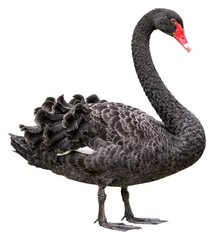 Black SwanCygnus atratus
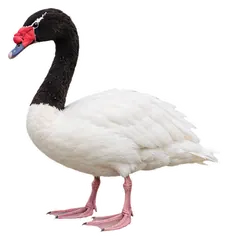 Black-necked SwanCygnus melancoryphus
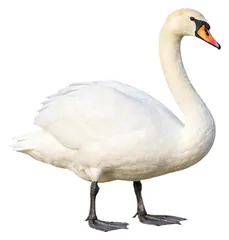 Mute SwanCygnus olor
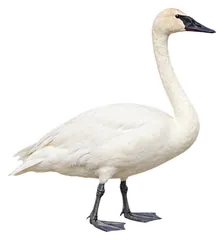 Trumpeter SwanCygnus buccinator
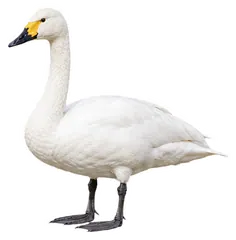 Tundra SwanCygnus columbianus
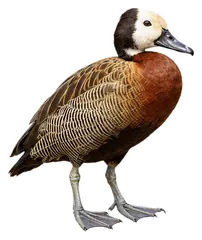 White-faced Whistling DuckDendrocygna viduata
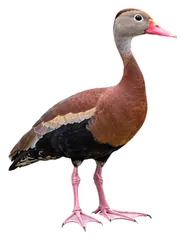 Black-bellied Whistling DuckDendrocygna autumnalis
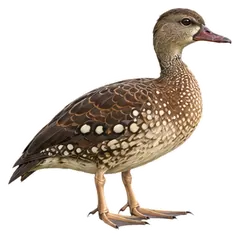 Spotted Whistling DuckDendrocygna guttata
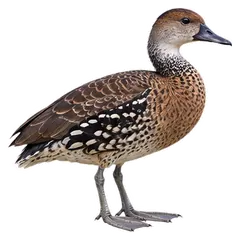 West Indian Whistling DuckDendrocygna arborea
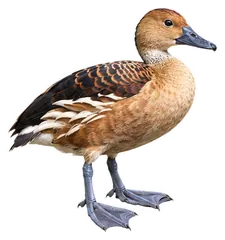 Fulvous Whistling DuckDendrocygna bicolor
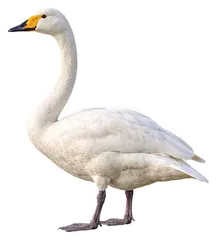
Download illustration
Free to use with credit: “Illustration: Bird Album (birdalbum.com)”. Drawn by AI from a reference photo by Andreas Trepte. ↗

Heard it but can't see it? Mingji identifies birds by sound and photo, on your phone.