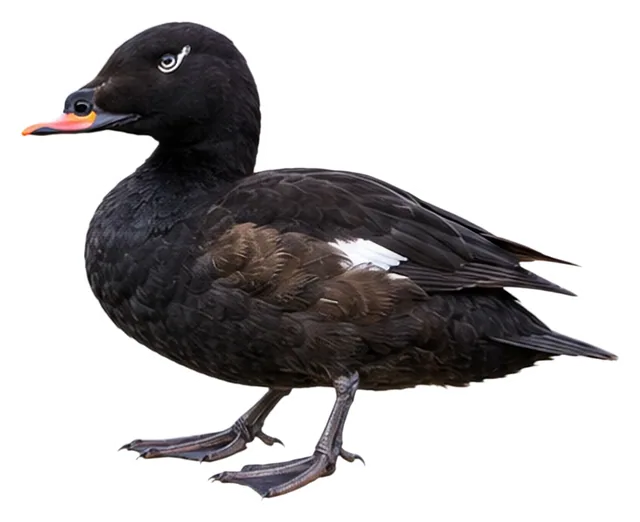
White-winged Scoter
Melanitta deglandi (Bonaparte, 1850)
1.8 kgWeight
The white-winged scoter (Melanitta deglandi) is a large sea duck.
Busiest months: October–November · Most records: United States, Canada, Mexico
Where and when it's recorded
Busiest months: October–November · Most records: United States, Canada, Mexico

White-winged Scoter has been recorded at 439 of the 8,276 birding hotspots we track, in 10 countries and regions.
Records by month Northern Hemisphere
Where it's recorded most
- Parker River NWRUnited States10,399 records
- Tommy Thompson ParkCanada6,847 records
- Quai, Pointe-au-PèreCanada4,652 records
More places
- Burlington – LaSalle Park/MarinaCanada4,176 records
- Whitefish PointUnited States4,094 records
- Salisbury Beach State ReservationUnited States3,581 records
- Halibut Point SPUnited States3,320 records
- Sandy HookUnited States3,192 records
- Toronto – Colonel Samuel Smith ParkCanada3,165 records
- Tsawwassen Ferry Terminal JettyCanada2,892 records
Countries and regions with the most records
eBird records via GBIF up to 2024-12-31. A record means someone listed it; more records partly mean more birders, not more birds.
About
The white-winged scoter (Melanitta deglandi) is a large sea duck. The genus name is derived from Ancient Greek melas "black" and netta "duck". The species name commemorates French ornithologist Côme-Damien Degland.
Excerpt from Wikipedia, CC BY-SA 4.0 · authors · Read more on Wikipedia
Questions
How big is the White-winged Scoter?
The White-winged Scoter weighs around 1.8 kg.
Where does the White-winged Scoter live?
Its breeding range: North America: subarctic western Alaska to eastern shore of James Bay (east-central Canada). It is most often recorded in United States, Canada and Mexico.
When is the best time to see the White-winged Scoter?
At the hotspots we track, it is recorded most in October and November (Northern Hemisphere).
Is the White-winged Scoter endangered?
The IUCN Red List classifies the White-winged Scoter as Least Concern.
What does the White-winged Scoter eat?
Main food: Fish, shrimp & shellfish.
What family is the White-winged Scoter in?
It belongs to the family Ducks, Geese, Swans (Anatidae), order Anseriformes.
At a glance
- Weight
- 1.8 kg
- Habitat
- Wetland
- Diet
- Fish, shrimp & shellfish
- Lifestyle
- On the water surface
- Migration
- Migratory
- Conservation
- Least Concern
More measurements
- Wing
- 270 mm
- Tail
- 76 mm
- Bill
- 47 mm
- Tarsus
- 43 mm
Averages from the AVONET dataset; length from field guides where available.
Range
North America: subarctic western Alaska to eastern shore of James Bay (east-central Canada)
Breeding range, IOC World Bird List 15.2
Classification
- Order
- Anseriformes
- Family
- Ducks, Geese, Swans Anatidae
- Genus
- Melanitta
Other birds in the genus Melanitta
 Surf ScoterMelanitta perspicillata
 Velvet ScoterMelanitta fusca
 Stejneger's ScoterMelanitta stejnegeri
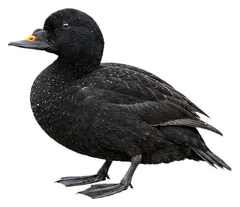 Common ScoterMelanitta nigra
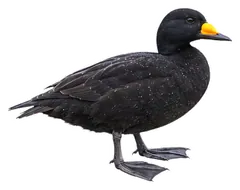 Black ScoterMelanitta americana
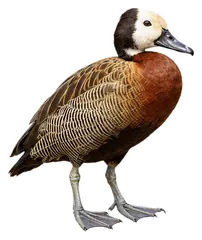 White-faced Whistling DuckDendrocygna viduata
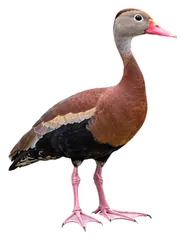 Black-bellied Whistling DuckDendrocygna autumnalis
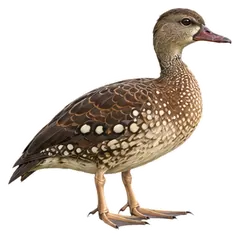 Spotted Whistling DuckDendrocygna guttata
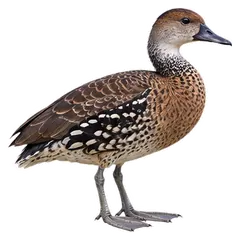 West Indian Whistling DuckDendrocygna arborea
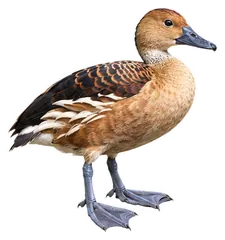 Fulvous Whistling DuckDendrocygna bicolor
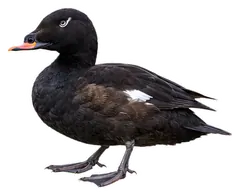
Download illustration
Free to use with credit: “Illustration: Bird Album (birdalbum.com)”. Drawn by AI from a reference photo by Steven McGrath. ↗
Heard it but can't see it? Mingji identifies birds by sound and photo, on your phone.
In other languages
- EnglishWhite-winged Scoter
- 简体中文白翅黑海番鸭
- 繁體中文白翅海番鴨
- 日本語アメリカビロードキンクロ
- 한국어검둥오리사촌
- DeutschHöckersamtente
- FrançaisMacreuse à ailes blanches
- EspañolNegrón aliblanco
- Portuguêsnegrola-de-asa-branca-americana
- ItalianoOrco marino del Pacifico
- NederlandsAmerikaanse Grote Zee-eend
- РусскийГорбоносый турпан
- Svenskaamerikansk knölsvärta
- DanskAmerikansk Fløjlsand
- Polskiuhla garbonosa