Velvet Scoter
Melanitta fusca (Linnaeus, 1758)
51–56 cmLength97 cmWingspan1.8 kgWeight
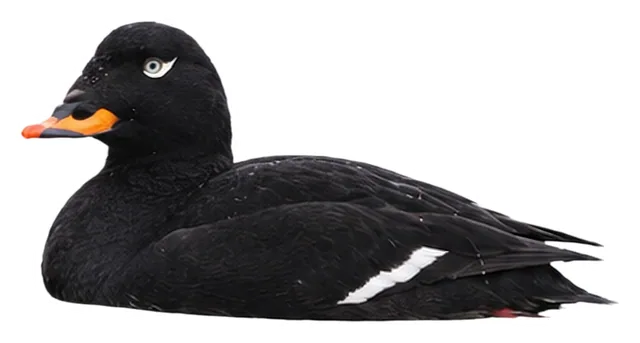
The male is glossy black, with large white patches on the wings and a small white patch behind the eye.
Busiest months: January and October · Most records: United Kingdom, Norway, Poland
How to identify
Field marks
- Male glossy black overall with large white wing patches
- Male has a small white patch behind the eye
- Male has orange on the bill
- Neck thick, bill long and broad, tail pointed
Male, female and young
Female browner and duller than male, without the same gloss on the feathers.
Where and when it's recorded
Busiest months: January and October · Most records: United Kingdom, Norway, Poland

Velvet Scoter has been recorded at 378 of the 8,276 birding hotspots we track, in 44 countries and regions.
Records by month Northern Hemisphere
To protect this bird from disturbance, we don't list exact sites.
Countries and regions with the most records
eBird records via GBIF up to 2024-12-31. A record means someone listed it; more records partly mean more birders, not more birds.
About
The velvet scoter (Melanitta fusca) is a large sea duck, which breeds over the far north of Europe and the Palearctic west of the Yenisey basin. The genus name is derived from Ancient Greek melas "black" and netta "duck". The species name is from the Latin fuscus "dusky brown".
Excerpt from Wikipedia, CC BY-SA 4.0 · authors · Read more on Wikipedia
Questions
How big is the Velvet Scoter?
The Velvet Scoter is about 51–56 cm long, with a wingspan of 97 cm and weighs around 1.8 kg.
Where does the Velvet Scoter live?
Its breeding range: Palearctic: northern Europe from Norway to Yenisey River (central Siberia) and northeastern Kazakhstan, also Turkey and Georgia. It is most often recorded in United Kingdom, Norway and Poland.
When is the best time to see the Velvet Scoter?
At the hotspots we track, it is recorded most in January and October (Northern Hemisphere).
Is the Velvet Scoter endangered?
The IUCN Red List classifies the Velvet Scoter as Vulnerable.
What does the Velvet Scoter eat?
Main food: Fish, shrimp & shellfish.
What family is the Velvet Scoter in?
It belongs to the family Ducks, Geese, Swans (Anatidae), order Anseriformes.
At a glance
- Length
- 51–56 cm
- Wingspan
- 97 cm
- Weight
- 1.8 kg
- Habitat
- Wetland
- Diet
- Fish, shrimp & shellfish
- Lifestyle
- On the water surface
- Migration
- Migratory
- Conservation
- Vulnerable
More measurements
- Wing
- 259 mm
- Tail
- 75 mm
- Bill
- 50 mm
- Tarsus
- 42 mm
Averages from the AVONET dataset; length from field guides where available.
Range
Palearctic: northern Europe from Norway to Yenisey River (central Siberia) and northeastern Kazakhstan, also Turkey and Georgia
Breeding range, IOC World Bird List 15.2
Classification
- Order
- Anseriformes
- Family
- Ducks, Geese, Swans Anatidae
- Genus
- Melanitta
Other birds in the genus Melanitta
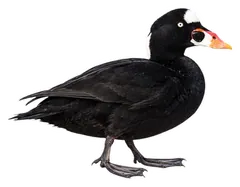 Surf ScoterMelanitta perspicillata
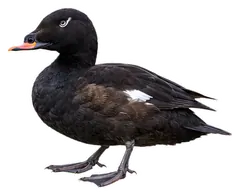 White-winged ScoterMelanitta deglandi
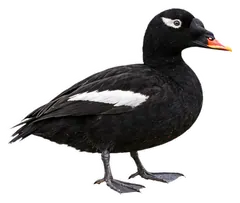 Stejneger's ScoterMelanitta stejnegeri
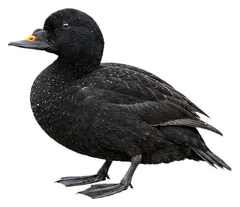 Common ScoterMelanitta nigra
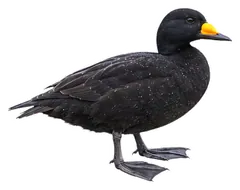 Black ScoterMelanitta americana
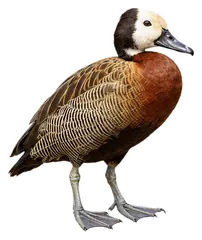 White-faced Whistling DuckDendrocygna viduata
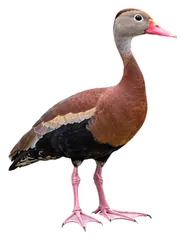 Black-bellied Whistling DuckDendrocygna autumnalis
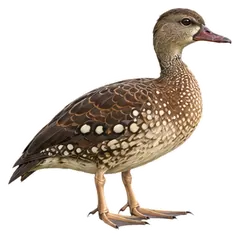 Spotted Whistling DuckDendrocygna guttata
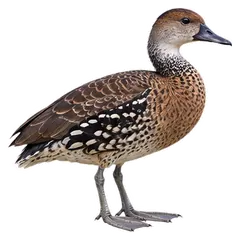 West Indian Whistling DuckDendrocygna arborea
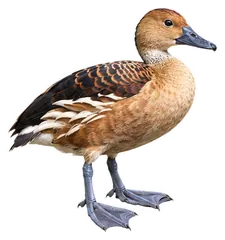 Fulvous Whistling DuckDendrocygna bicolor
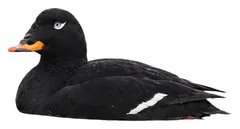
Download illustration
Free to use with credit: “Illustration: Bird Album (birdalbum.com)”. Drawn by AI from reference photos. ↗
Heard it but can't see it? Mingji identifies birds by sound and photo, on your phone.