 Bird Album
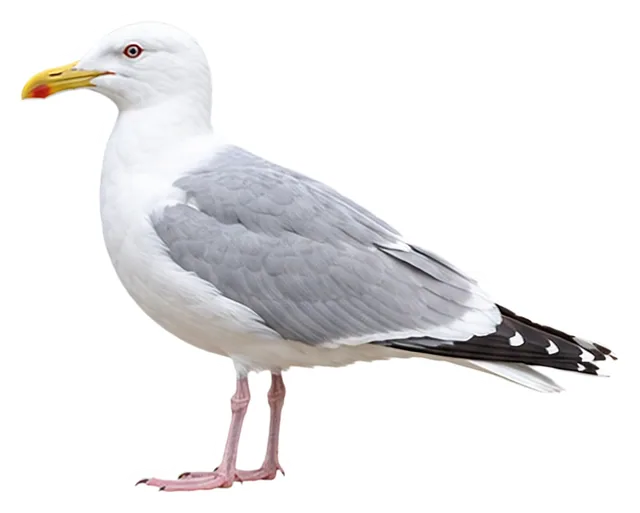
Mongolian Gull
Larus mongolicus Sushkin, 1925
It is a large gull with medium-gray back and wings, black-tipped primaries and usually pink legs.
Busiest months: March · Most records: China, Mongolia, South Korea
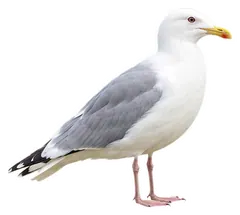
Looks like Caspian Gull, Vega Gull
How to identify
Field marks
- Back and wings medium gray
- Tips of primaries black
- Legs usually pink, sometimes tinged yellow
- Bill stout
Male, female and young
Male weighs 1.15–1.58 kg; female 0.85–1.1 kg.
Similar species
Where and when it's recorded
Busiest months: March · Most records: China, Mongolia, South Korea

Mongolian Gull has been recorded at 465 of the 8,276 birding hotspots we track, in 8 countries and regions.
Records by month Northern Hemisphere
Where it's recorded most
- Ugii Lake, Ugiinuur, Arkhangai, MNMongolia427 records
- Mai Po Nature ReserveHong Kong (China)354 records
- Gun Galuut NRMongolia272 records
More places
- Shahe ReservoirChina240 records
- Ma ChangChina231 records
- Baengnyeong-do (island)South Korea218 records
- Boon Tsagan NuurMongolia153 records
- Nanhui DongtanChina130 records
- Songdo – Namdong ReservoirSouth Korea125 records
- Bayan Lake, Bayannuur, Bulgan, MNMongolia110 records
Countries and regions with the most records
eBird records via GBIF up to 2024-12-31. A record means someone listed it; more records partly mean more birders, not more birds.
About
The Mongolian gull (Larus mongolicus) is a large gull in the large white-headed gull (Larus) complex which breeds in interior eastern Asia.
Excerpt from Wikipedia, CC BY-SA 4.0 · authors · Read more on Wikipedia
Questions
Where does the Mongolian Gull live?
Its breeding range: Palearctic: Altai Republic to Lake Baikal (south-central Russia) and Mongolia; Lake Khanka (Heilongjiang, northeastern China); and Yellow Sea islands (western Korean Peninsula). It is most often recorded in China, Mongolia and South Korea.
When is the best time to see the Mongolian Gull?
At the hotspots we track, it is recorded most in March (Northern Hemisphere).
What family is the Mongolian Gull in?
It belongs to the family Gulls, Terns, Skimmers (Laridae), order Charadriiformes.
Range
Palearctic: Altai Republic to Lake Baikal (south-central Russia) and Mongolia; Lake Khanka (Heilongjiang, northeastern China); and Yellow Sea islands (western Korean Peninsula)
Breeding range, IOC World Bird List 15.2
Classification
- Order
- Charadriiformes
- Family
- Gulls, Terns, Skimmers Laridae
- Genus
- Larus
Other birds in the genus Larus
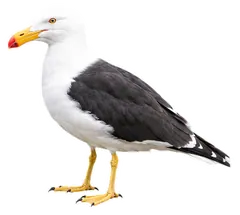 Pacific GullLarus pacificus
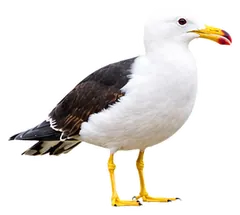 Belcher's GullLarus belcheri
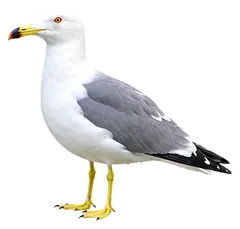 Black-tailed GullLarus crassirostris
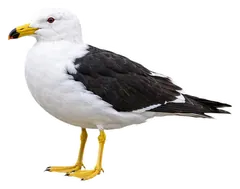 Olrog's GullLarus atlanticus
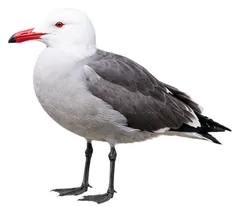 Heermann's GullLarus heermanni
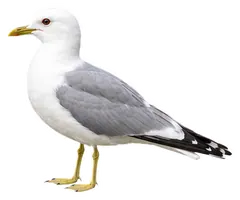 Common GullLarus canus
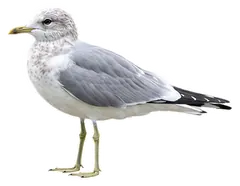 Short-billed GullLarus brachyrhynchus
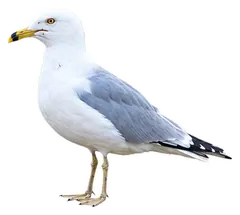 Ring-billed GullLarus delawarensis
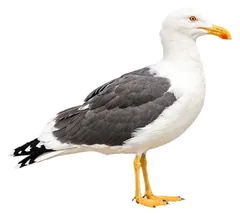 Yellow-footed GullLarus livens
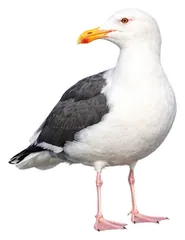 Western GullLarus occidentalis
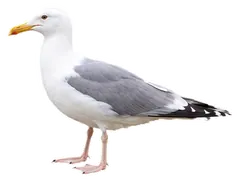 Caspian GullLarus cachinnans
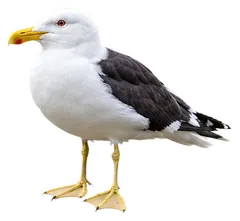 Kelp GullLarus dominicanus
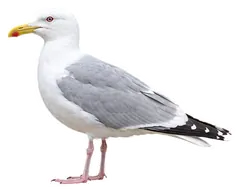
Download illustration
Free to use with credit: “Illustration: Bird Album (birdalbum.com)”. Drawn by AI from a reference photo by Dion Art. ↗

Heard it but can't see it? Mingji identifies birds by sound and photo, on your phone.